


What to Do When Braids Get Frizzy: Gentle Fixes That Work

A few fuzzy strands don’t mean your braids need to come out. Knowing what to do when braids get frizzy starts with identifying whether you’re seeing surface flyaways, new growth, or braids that are loosening. Heavy product or tight restyling can create more trouble than a little frizz.
For mild fuzz, a gentle refresh and less friction may help keep your style looking neat. This guide explains how to check your braids, what to avoid, and when a quick touch-up may not be enough.
If the style is coming undone or home care isn’t enough, professional braid takeout and wash-and-blowdry care can help you move into your next style gently. At Phemmie’s Place in Glen Burnie, these services are available by appointment.
Table of Contents
Why Do Braids Get Frizzy, and Is It Normal?
A little surface fuzz can appear as you wear braids. Everyday movement, moisture, and handling can lift loose hairs from the braided pattern. Frizz alone doesn’t mean the style is damaged or needs to come out.
Friction from clothing or bedding, frequent touching, and rough drying can make braids look less smooth. Sweat or dampness may also affect their appearance. New growth is different: it shows near the scalp as your hair grows beyond the original braid. The effect varies by hair and style. For example, Box braids have a distinct plaited appearance, but even a carefully installed protective style can develop flyaways over time.
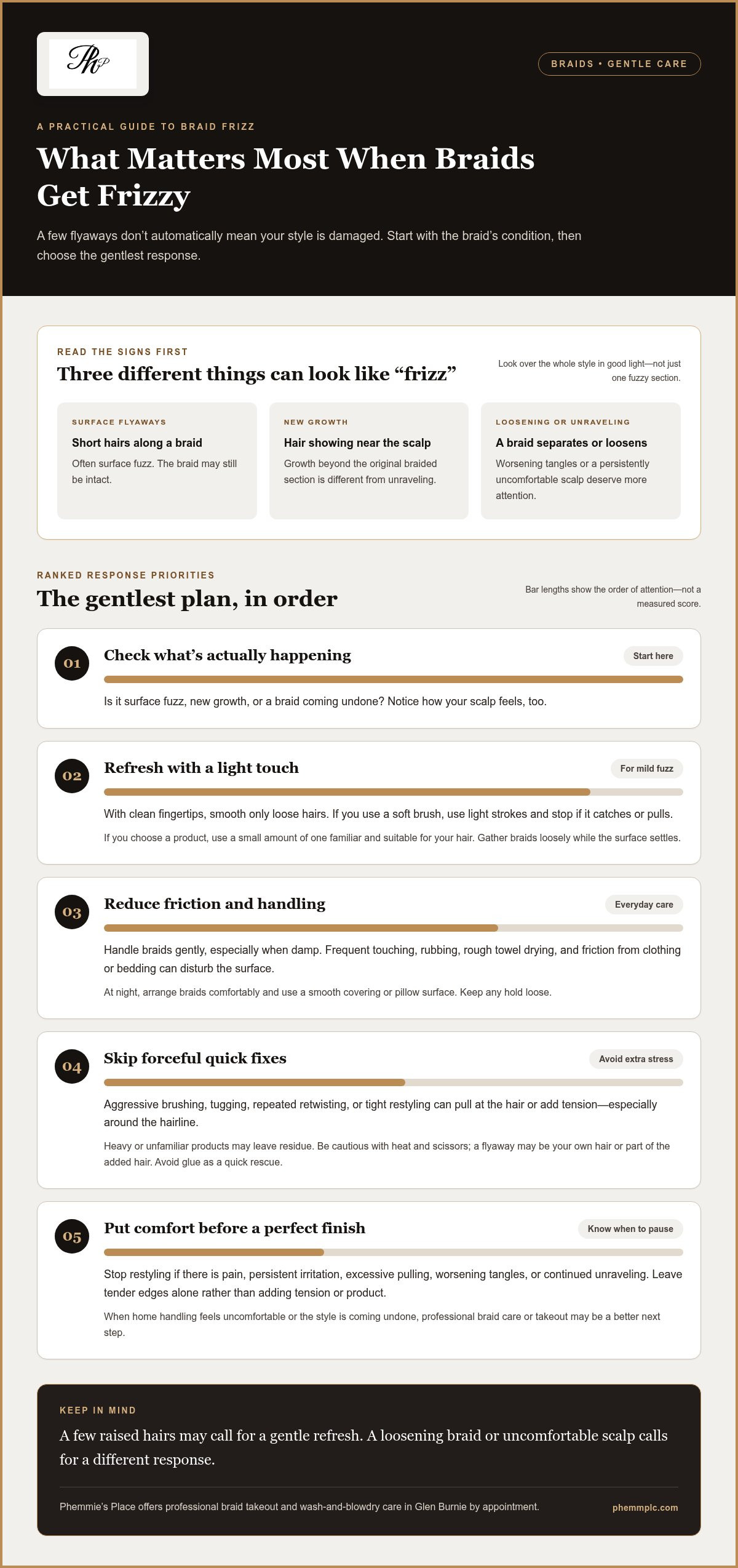
Surface fuzz, new growth, or braids coming undone?
Check where the loose hairs are. Short hairs sticking out along a braid are often surface flyaways. New growth appears near the scalp, where your hair has grown beyond the braided section. Neither necessarily means the braids are unraveling.
Unraveling looks different: a braid may loosen or separate. Tangling can feel knotted or difficult to gently separate. Look over the whole style rather than judging it by one fuzzy section, and notice how your scalp feels. Discomfort or persistent irritation deserves more attention than a few flyaways.
What everyday habits can make braids look frizzier?
Repeatedly touching or rubbing braids can lift short hairs. Friction from fabric and rough towel drying can also disturb the surface. Handle your style gently, especially when it’s damp.
Sweat or dampness may affect some styles, but there isn’t one explanation for every braid or hair texture. If your braids look fuzzy after a day of movement, inspect them in good light before deciding what to do when braids get frizzy. A few raised hairs call for a different response than braids coming apart or a persistently uncomfortable scalp.
How to Fix Frizzy Braids Gently at Home
For mild surface frizz, start with a simple check: are the braids intact, and is your scalp comfortable? If so, smooth only the loose hairs, secure the braids loosely, and let the style settle. Clean hands and a light touch help you avoid adding tension.
A quick refresh for loose hairs and flyaways
Inspect your braids in good light before applying anything. If they’re secure and you see only a few flyaways, smooth the surface with clean fingertips. A soft brush may suit some braid surfaces, but use light strokes and stop if hairs catch or pull.
If you use a product, choose one familiar and suitable for your hair, and apply a small amount to the fuzzy area. Layering on product may leave residue without making the style smoother. The American Academy of Dermatology also shares dermatologist-approved hair care tips that emphasize gentle care.
Gather the braids loosely with a soft covering or tie while the surface settles. Don’t pull them taut. Some textured styles are meant to look soft and airy, with loose strands as part of the finish. You don’t need to press every strand into place.
How to handle frizz around the hairline
Be especially gentle near your edges. Don’t slick delicate hairs tightly or pull them into place to make the hairline look uniform. If the area feels tender or irritated, leave it alone rather than adding product or tension. A smoother appearance isn’t worth discomfort.
If you’re considering a future style, learn more about the look and feel of knotless braids in Glen Burnie before your next appointment.
Keep the refresh simple: inspect, smooth lightly, secure loosely, and let the braids rest. If a braid is coming undone or your scalp is uncomfortable, don’t keep pulling or redoing it. Phemmie’s Place offers professional braid takeout and wash-and-blowdry care in Glen Burnie. Explore professional braid care.
Frizz Fixes to Avoid: What Can Make Braids Look Worse?
Trying to force every strand back into place can put more stress on your braids than the frizz itself. Aggressive brushing, tugging, and repeated retwisting may pull at the hair or loosen the style. Tight restyling can add tension, especially around the hairline. For mild fuzz, pause before reaching for a forceful fix.
Think of what to do when braids get frizzy as a choice between a light refresh and leaving the style alone. More product or stronger styling won’t necessarily solve the cause, and it can make the surface feel coated or look less clean.
Should you use heat, gel, or scissors on frizzy braids?
Heat may affect added hair differently from your natural hair, so don’t assume one approach is safe for every braid style. Gel and other styling products are optional, not guaranteed fixes. If you use one, apply a small amount of a product you already know works for your hair. Heavy or unfamiliar products can leave residue.
Be cautious with scissors, too. A flyaway may be your own hair or part of the added hair. Cutting close to the braid without knowing which can remove more than you intend. Avoid glue or tight restyling as a quick rescue. Neither addresses whether the braid is simply fuzzy or actually coming undone.
When frizz may point to a bigger concern
Stop restyling if you feel pain, persistent scalp irritation, or excessive pulling. Also pay attention if tangles keep worsening or sections continue to unravel. Don’t brush, retwist, or tighten an area to hide what you’re noticing.
If home handling feels uncomfortable or the style is unraveling, repeated touch-ups may not be the right next step. Professional braid takeout can help you move on from a style that’s difficult to manage. Comfort matters more than making every braid look perfectly smooth.
How to Prevent Braids from Getting Frizzy Again
A simple routine can help limit friction and keep your braids looking cared for. You don’t need to handle them constantly or add product every day. Focus on a comfortable nighttime setup, a gentle touch, and care that suits your style.
A simple nighttime routine for braids
Before bed, arrange your braids so they rest comfortably. If you gather them, keep the hold loose rather than pulling them against your scalp. A satin or silk covering, or a smooth pillowcase, may help reduce rubbing. These are optional ways to limit friction, not a promise that frizz won’t appear.
Choose what feels comfortable for your braid length and style. If a covering shifts or creates tension, adjust it or use a smooth pillow surface instead. The best routine is one you can follow gently and consistently.
Day-to-day braid maintenance that stays gentle
Give your braids a light touch during the day. Repeatedly running your hands over them, forcefully detangling loose strands, or rubbing them with a towel can disturb the surface. If your braids get wet, follow care directions for your style and avoid rough towel rubbing. Pat gently instead.
Keep moisture and product use suited to your hair, scalp, and braid style. A routine that works for one person may not feel right for another, so avoid piling on products to prevent every flyaway. For more detail about one protective style, see this guide to knotless braids in Glen Burnie.
Prevention won’t keep every loose hair in place, and a little surface softness can develop as braids are worn. If you’re wondering what to do when braids get frizzy again, reduce friction and handle them gently rather than reaching for a tight restyle. When home care isn’t enough, explore professional braid care, including braid takeout and wash-and-blowdry services at Phemmie’s Place in Glen Burnie.
When to Get Professional Braid Care or Take Braids Down
A few flyaways alone don’t mean it’s time to remove your braids. If the style remains secure and your scalp feels comfortable, a gentle home refresh may be enough. Consider the whole style and how it feels, not just whether every strand looks smooth.
Signs a home refresh may not be enough
Pause home restyling if you notice ongoing tenderness, pulling, or scalp discomfort. Don’t tighten or retwist braids to cover up an uncomfortable feeling. Widespread unraveling also needs more than surface smoothing. If sections keep coming loose or tangles are becoming harder to manage, repeated brushing and pulling may add stress rather than help.
You don’t need to diagnose the cause yourself. Consider how the style feels, how secure it is, and whether it’s still manageable without pulling. What to do when braids get frizzy depends on more than appearance.
A calm next step for braid takeout and hair care
Not every frizzy style needs to come down. But if the braids are extensively unraveling, feel uncomfortable, or are difficult to manage gently, braid takeout may be a more suitable next step than continued touch-ups. Takeout followed by a wash and blowdry offers a supported transition out of the style and a chance to care for your hair afterward.
At Phemmie’s Place in Glen Burnie, braid takeout and wash-and-blowdry services are available by appointment. Book braid care at Phemmie’s Place.
Give Your Braids a Gentle Reset
A few flyaways don’t automatically mean your style is damaged or needs to come down. Check whether you’re seeing surface fuzz, new growth, or braids that are loosening. For mild frizz, a light touch and less friction are often kinder than pulling, brushing hard, or layering on product.
Knowing what to do when braids get frizzy also means noticing how your hair and scalp feel. Ongoing discomfort, persistent irritation, or widespread unraveling may call for more than a home refresh. Don’t force a fix when the style needs attention.
Phemmie’s Place is an appointment-only salon in Glen Burnie offering professional braid takeout and wash-and-blowdry care. Book an appointment for braid care at Phemmie’s Place.
Frequently Asked Questions
Is it normal for braids to get frizzy?
Yes, some surface fuzz and flyaways can appear as you wear braids. Friction and frequent handling may contribute, but frizz alone doesn’t prove your hair is damaged or that the style must come down. Check whether braids are unraveling or tangling, and notice whether your scalp feels painful or irritated. If you see mild surface fuzz and feel comfortable, try a gentle refresh.
How can I fix frizzy braids quickly?
First, check whether you’re seeing surface flyaways or braids coming undone. For mild fuzz, smooth the surface gently with clean hands without pulling at the braid. If you choose a familiar styling product, use a small amount instead of layering it. Secure the braids comfortably and let them settle. If your scalp feels tender or irritated, stop styling rather than forcing a quick fix.
Can I use mousse or gel on frizzy braids?
You can try a small amount of familiar mousse or gel, but it isn’t a guaranteed fix for every braid style. Apply it lightly to the fuzzy surface instead of coating the braids or layering products, which may leave residue. Don’t pull tightly as you smooth. If your scalp feels uncomfortable or irritated, skip styling rather than adding tension or product.
What should I avoid doing when my braids get frizzy?
Avoid aggressive brushing, pulling, tight restyling, and cutting flyaways close to a braid. These actions may make the style uneven or add stress to your hair. Be cautious with heat and unfamiliar products, since natural hair and added hair may respond differently. For mild surface frizz, a gentle refresh is better than forcing every loose strand back into place.
Does frizz mean I should take my braids out?
No, mild surface fuzz doesn’t automatically mean you need to remove your braids. Check whether the style is still secure and manageable, and notice how your scalp feels. Persistent discomfort, extensive unraveling, or worsening tangles may mean a quick refresh isn’t enough. Avoid forceful fixes and consider professional braid care or careful takeout.
How can I prevent my braids from getting frizzy while I sleep?
Reduce rubbing without making your braids feel tight. Arrange them comfortably before bed, then consider a smooth satin or silk covering or pillowcase if it suits your routine. In the morning, use your hands to settle loose surface hairs instead of pulling at the braids. Keep the routine simple and adjust it for your braid length, style, and comfort. A little fuzz can still appear as you wear the style.
When should I get professional help for frizzy braids?
Consider professional care if braids are unraveling across several areas, your scalp remains uncomfortable, or you’re unsure how to remove the style gently. Mild surface frizz doesn’t automatically call for salon care, but persistent discomfort deserves attention rather than tighter styling. Phemmie’s Place in Glen Burnie offers appointment-only braid takeout and professional wash-and-blowdry services.

Comments