


How to Sleep with Butterfly Locs: A Gentle Night Routine

What if protecting your butterfly locs overnight had less to do with tying them down and more to do with reducing friction? If you’re wondering how to sleep with butterfly locs without waking to frizz or tangles, you’re not alone. A bonnet that slips off or a tight tie that pulls at your roots can make bedtime feel like a styling puzzle.
A gentle routine can help your locs stay neat while keeping your scalp comfortable. Before bed, make sure your hair is dry, gather longer locs loosely, and cover them with satin or silk to reduce rubbing against your bedding. You don’t need to braid them tightly or force them into a style that feels uncomfortable.
In this guide, you’ll learn how to choose a comfortable way to gather and cover your locs, with options for shorter and longer styles. You’ll also find simple adjustments for a wrap that slips or feels too snug, so your routine feels easy to repeat and your morning starts more peacefully.
Table of Contents
How to Sleep with Butterfly Locs Without Flattening or Tangling Them
A calm bedtime routine can make caring for butterfly locs feel simple and comfortable. The goal isn’t to pin every loc in place. It’s to limit rubbing and tangling while letting your scalp and roots rest without a tight tie or wrap.
There’s no single setup for everyone. Your loc length, sleep position, and preferred covering all matter. Butterfly locs are a protective hairstyle, and gentle nighttime care follows the same idea: reduce unnecessary handling and shield your hair from friction. Think secure, not squeezed.
Protect the locs from friction, not with tight tension. Use that rule to guide your choices, whether you leave shorter locs loose or gently gather longer ones before covering them.
What can happen to butterfly locs overnight?
As you turn in your sleep, locs may brush against your pillow or bedding. That contact can disturb their textured surface and leave some looking frizzier in the morning. Locs may also lightly cross or tangle, especially if they move freely across the bed.
These changes aren’t guaranteed, and a nighttime covering won’t keep the style perfectly unchanged. It can create a smoother barrier between your locs and the bedding, helping reduce direct rubbing. A smooth pillowcase or a comfortable satin or silk covering is a gentle place to start.
What should a comfortable bedtime setup do?
Your setup should keep locs contained without pulling at the roots. If your locs are short enough to fit comfortably, you can leave them loose inside a bonnet. If they’re longer, gather them gently so they don’t spread across your pillow, then choose a covering that fits their length without bunching them tightly.
Check how everything feels before settling in. A wrap or bonnet should stay in place without pressing or tugging at your hairline. If it feels restrictive, loosen or adjust it. The best setup limits direct rubbing and lets you rest, rather than forcing your locs into a tight shape.
That’s the heart of how to sleep with butterfly locs: choose a gentle setup that suits your length and comfort, then let it do its work overnight.
Why Friction, Tension, and Moisture Matter for Butterfly Locs
Night care is a balance. You want to limit the rubbing that can disturb butterfly locs’ textured surface, but you don’t want to hold them so tightly that your roots feel pulled. Repeated contact with bedding may leave locs looking frizzier or lightly crossed by morning. A smooth sleep surface or comfortable hair covering can reduce direct rubbing without compressing your locs.
Overnight protection should reduce rubbing, not increase root tension. A snug covering stays in place comfortably; a tight wrap or tightly secured gather presses or pulls. That difference matters. The American Academy of Dermatology explains that repeated tension from hairstyles can contribute to traction alopecia. You don’t need to secure your locs firmly to protect their style while you sleep.
Does a bonnet or scarf need to feel tight?
No. Choose a fit that feels secure without pressing on your hairline or pulling at the roots. If the edge feels constricting or a scarf tie causes discomfort, loosen or adjust it before bed. Coverings fit differently from person to person, so let your comfort guide your choice. If you wake and notice pressure, try a gentler fit the next night.
The same principle applies if you gather your locs before covering them. Keep the gather loose enough to avoid strain. If it tugs when you turn your head, it’s too tight for a restful setup. You should be able to settle in without constantly noticing your wrap or feeling tension at your scalp.
Should butterfly locs be dry before bed?
Avoid going to bed with locs that still feel damp, especially if you plan to cover or gather them. Damp hair beneath a covering may feel uncomfortable overnight. Give your locs time to feel dry before settling in, rather than trapping that damp feeling under a bonnet or scarf.
Keep the routine simple: check that your locs feel dry, make sure your covering isn’t restrictive, and adjust anything that causes discomfort. If you’re considering butterfly locs or want support with loc care, explore butterfly loc services at our Glen Burnie salon.
A Simple Butterfly Locs Night Routine in Four Steps
A few small actions can make bedtime easier without turning your locs into a tight style. Use this four-step routine as a guide, then adjust it to suit your loc length and what feels restful.
Check your locs. Before bed, make sure they feel dry and comfortable. Notice whether anything is caught in them that could snag, such as a loose accessory or an item from your day. Gently remove it so your locs can settle freely.
Gather longer locs loosely, if it feels comfortable. Bring them together gently so they’re easier to cover or position on your pillow. Skip a tight ponytail. If your locs are shorter, or gathering them pulls at your roots, leave them loose instead. Comfort matters more than following one fixed method.
Cover or choose a smooth pillow surface. If you wear a bonnet or scarf, tuck your locs inside without twisting or compressing them. Arrange them so they lie comfortably instead of folding them into a tight bundle. If you prefer not to wear a covering, a smooth pillowcase can help limit direct rubbing against the bedding.
Settle in and check for pulling. Lie down as you normally would and notice how the covering and gathered locs feel. If an edge presses, a tie tugs, or your locs feel strained, loosen or reposition them. A smooth, secure fit should let you rest without feeling held in place.
How should you gather butterfly locs for sleep?
For longer locs, a loose gather can keep them together without the pull of a tight ponytail. Bring them together gently and stop if you feel tension at the roots. Shorter locs may sit comfortably loose inside a covering, so there’s no need to gather them if doing so feels restrictive. Let length and comfort guide you.
How can you keep a bonnet or scarf in place?
Place the covering over your locs gently, then tuck in any ends without twisting or pushing them into a tight space. Check the fit while lying down, since pressure or slipping may become noticeable then. If a bonnet or scarf won’t stay comfortably in place, a smooth pillowcase offers a simple alternative.
With practice, you’ll find the combination that suits your locs and your sleep. The routine is working if your hair feels comfortably contained, not pulled or tightly packed.
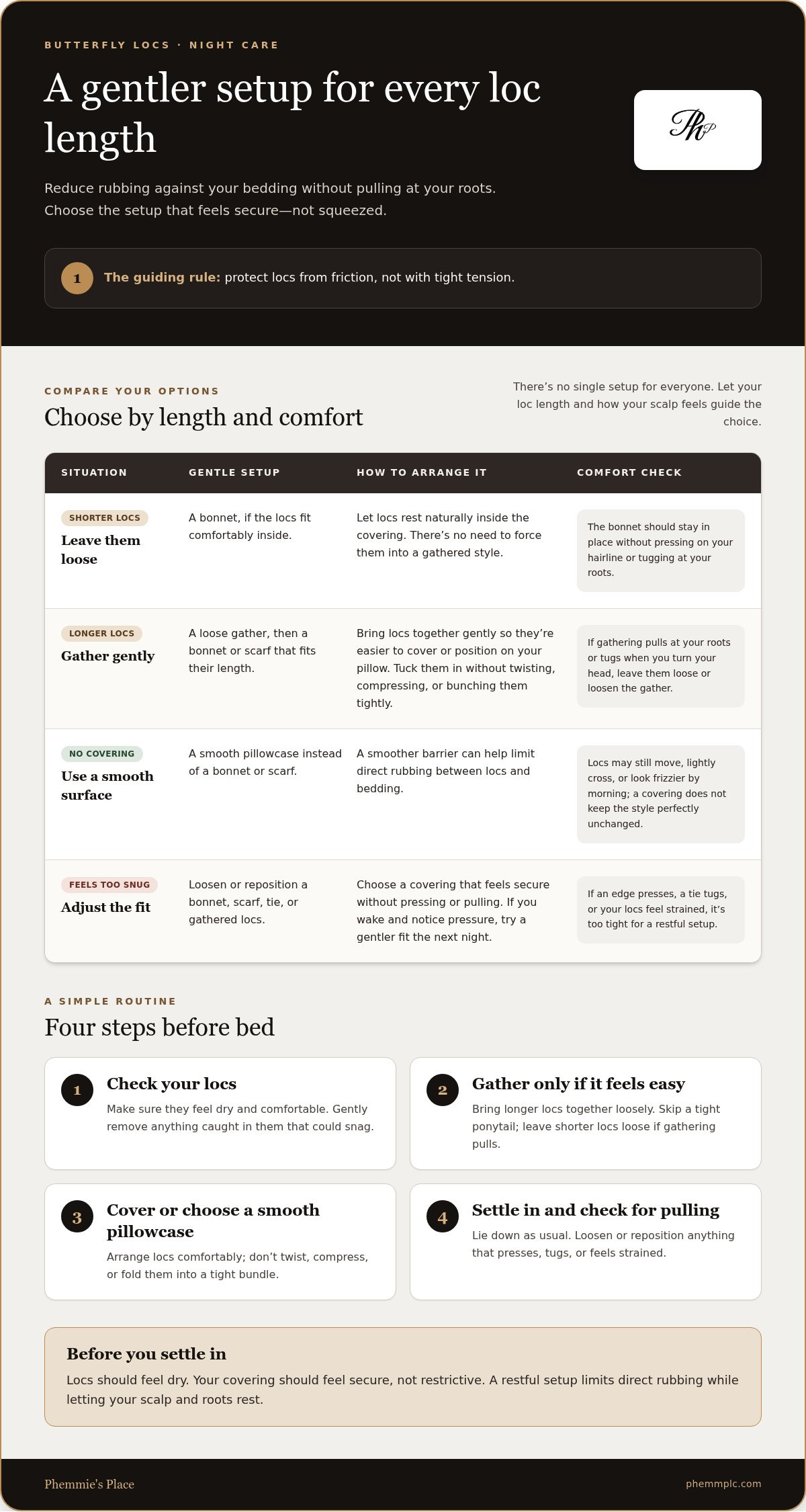
How to Adjust Your Sleep Setup for Loc Length and Comfort
Your most comfortable setup may change with your loc length, sleep position, and preferred covering. There’s no single way to arrange butterfly locs for everyone. Use the options below as a starting point, then adjust anything that presses, snags, or pulls.
What if your locs are too long to fit comfortably?
Try guiding longer locs loosely to one side or away from places where your body puts pressure on them. You can pair that gentle gather with a covering if it fits comfortably. Avoid treating tight braiding or twisting as a one-size-fits-all fix. If an arrangement pulls or makes it hard to settle, let your locs fall more freely and choose the position that feels restful.
What if your bonnet slips off at night?
A slipping covering can be frustrating, but tying it tighter may create pressure or pulling. Instead, adjust the fit or try a different comfortable covering style. Check that no locs are snagged at the edge and that the covering doesn’t press when you lie down. A smooth pillowcase can provide another layer between your locs and bedding if a bonnet or scarf doesn’t stay in place.
Think of these options as flexible, not fixed. As you figure out how to sleep with butterfly locs, let length guide the setup, but let comfort make the final call. Change your arrangement whenever you notice pulling, pressure, or bunching.
For butterfly locs or help with your locs, explore butterfly loc services at our Glen Burnie salon.
Morning Care and When to Revisit Your Butterfly Locs Routine
A gentle morning reset helps you see how your locs settled overnight without disturbing their texture. Remove your covering slowly, release any loose gather, and give your locs a moment to fall naturally. Then decide whether they need a small adjustment or are ready for the day.
How do you refresh butterfly locs in the morning?
Start with your hands. If a few locs have lightly crossed, ease them apart with your fingers instead of pulling, brushing hard, or forcing them into place. Work patiently and stop if you meet resistance. Letting the locs settle before you adjust them can make it easier to see where they need attention and where they can be left alone.
Keep the refresh simple. You don’t need to redo your whole style because of a little movement during sleep. A few careful finger adjustments are often enough to help locs fall comfortably. If you notice repeated frizz or tangling, consider whether your covering or sleeping position is creating extra rubbing, then make one gentle change at bedtime.
When might professional loc care be helpful?
Your routine should feel restful. If the same setup regularly leaves your scalp uncomfortable or your roots feeling pulled, change how you gather or cover your locs. You don’t have to keep using an arrangement that feels wrong. If discomfort continues or makes nighttime care difficult, professional styling support can help you consider a different approach to your butterfly locs and their care.
Learning how to sleep with butterfly locs means noticing what feels comfortable and making small adjustments. Let your locs settle in the morning, separate only those that have lightly crossed, and reconsider any bedtime habit that repeatedly causes discomfort.
For butterfly loc styling support, book an appointment at our Glen Burnie salon when you’re ready.
Make Your Night Routine Feel Easy and Gentle
A little consistency can make bedtime simpler for you and your butterfly locs. The key to how to sleep with butterfly locs is to reduce rubbing without pulling at your roots. Start with dry, comfortable locs, gather longer lengths loosely if it feels right, and choose a covering or smooth pillow surface that lets you rest easily.
Pay attention to how your setup feels. If a wrap presses, a gather tugs, or your locs feel bunched, adjust it rather than tying it tighter. In the morning, remove your covering gently, let gathered locs fall naturally, and use your fingers to separate any that have lightly crossed.
If you’re ready for butterfly locs or would appreciate professional installation and maintenance, explore butterfly loc styling at our Glen Burnie salon. Our appointment-only salon offers a dedicated setting for protective styling. Choose a routine that feels kind to your hair and comfortable for you. A peaceful night can begin with a few gentle choices.
Frequently Asked Questions
Can you sleep with butterfly locs loose?
Yes, you can leave your butterfly locs loose if they feel comfortable and aren’t caught beneath your head or shoulders. This may suit shorter locs that don’t spread across your pillow. If longer locs move around or get in your way, gather them gently or use a comfortable covering. Choose the arrangement that limits rubbing without pulling at your roots, and adjust it if you feel pressure as you settle in.
Should I wear a bonnet to sleep with butterfly locs?
A bonnet can help keep locs contained and reduce direct rubbing against bedding, but it should feel comfortable rather than tight. Choose a fit that lets your locs sit inside without bunching or pressing at your hairline. If a bonnet feels restrictive or slips despite a comfortable fit, try a scarf or sleep on a smooth pillowcase instead. The best option is the one that lets you rest without tugging or discomfort.
How do you tie butterfly locs at night?
For how to sleep with butterfly locs, start by gathering longer locs loosely, only if it feels comfortable. Avoid a tight ponytail or wrap that pulls at the roots. Place a bonnet or scarf over the gathered locs without twisting them tightly inside. Before bed, lie down and check for pressure or tugging. If anything feels restrictive, loosen or reposition it. Shorter locs can stay loose if gathering them creates tension.
Can butterfly locs get frizzy while you sleep?
Yes, butterfly locs may look a little frizzier after sleep. Repeated rubbing against bedding can disturb their textured surface, and locs may lightly cross as you move. Frizz isn’t inevitable, and a covering won’t prevent every change. To reduce direct friction, try a comfortable bonnet or scarf, or use a smooth pillowcase. In the morning, let your locs settle and gently separate any that have crossed with your fingers.
Is it better to sleep with butterfly locs up or down?
Neither position is best for everyone. Shorter locs may feel fine left loose, while longer locs might be more comfortable in a gentle gather that keeps them from spreading across the pillow. Avoid securing them tightly just to keep them in one place. Try a position that feels relaxed when you lie down, and change it if your locs pull, bunch, or press uncomfortably against your head.
What should I do if my bonnet keeps coming off?
If your bonnet slips, adjust its fit or try another comfortable covering style rather than tying it tighter. Check that your locs aren’t caught at the edge and that the bonnet doesn’t press against your hairline when you lie down. A smooth pillowcase can offer a backup layer if a head covering won’t stay in place. You can also leave your locs loosely arranged if that feels more restful.
Can I sleep with butterfly locs if they are damp?
It’s better to wait until your butterfly locs feel dry before bed, especially if you plan to cover them. Damp locs enclosed beneath a bonnet or scarf may feel uncomfortable overnight. Avoid bundling or covering them while they still feel wet. Let them dry before settling in, then choose a loose, comfortable arrangement. This simple check helps make your nighttime routine more pleasant without adding extra styling steps.
Ready for butterfly locs or professional loc care? Book an appointment at our Glen Burnie salon.


Comments