


How to Wash Microlocs: A Gentle Step-by-Step Routine

Learning how to wash microlocs can feel daunting if you’re worried about loosening newer locs or leaving shampoo behind. A gentle approach starts with caring for your scalp and adjusting your technique to your locs’ stage. If you’re in Glen Burnie, the same basics can help you build a practical routine between microloc maintenance appointments.
You don’t need to scrub hard to get clean. Wash gently, rinse thoroughly, and allow your locs to dry fully. Newer locs may need extra care, while mature locs can often handle a simpler routine.
This guide walks you through preparing, cleansing, rinsing, and drying microlocs. It also explains how to choose a washing rhythm based on your scalp, activity, products, and loc maturity.
Table of Contents
Why washing microlocs matters and what to prepare first
Washing lifts away sweat, oil, and product residue, while a gentle touch helps limit pulling and frizz. The goal isn’t to make every loc look perfectly smooth after each wash. Some frizz or loose hairs can happen, and results vary with your hair, installation, and loc stage.
Washing cleanses the scalp and locs; retightening maintains the loc structure, and styling changes how the locs are worn. One doesn’t replace the others. Microlocs are a smaller loc style; Dreadlocks offers broader context on loc types and their history. For your wash routine, focus on your scalp, handle your locs gently, and follow the care guidance for your installation.
What to prepare before washing microlocs
Gather a gentle shampoo, water, and a clean towel before you begin. Set up a comfortable space where you can rinse thoroughly and let your locs dry afterward. Wash your hands and keep your supplies within reach so you can move calmly through each step.
Choose a shampoo that rinses clean, and avoid layering on products that may leave residue. You don’t need an elaborate collection of supplies. A simple setup makes it easier to handle your locs with care.
How microloc maturity affects washing
Newer locs may be more delicate, so avoid rough rubbing, tugging, or piling them on top of your head. Mature locs are generally more established, but gentle handling and a thorough rinse still matter. If you’re unsure how to wash microlocs at your current stage, follow the instructions from the loctician who installed them. Early-care guidance can vary with the installation method and your hair.
No wash technique can promise that every loc will stay perfectly smooth or prevent all loosening. Keep your movements light, pay attention to how your locs respond, and don’t treat normal frizz as a sign of damage. With a prepared space and care suited to your loc stage, wash day can feel more manageable.
How to wash microlocs: a gentle step-by-step routine
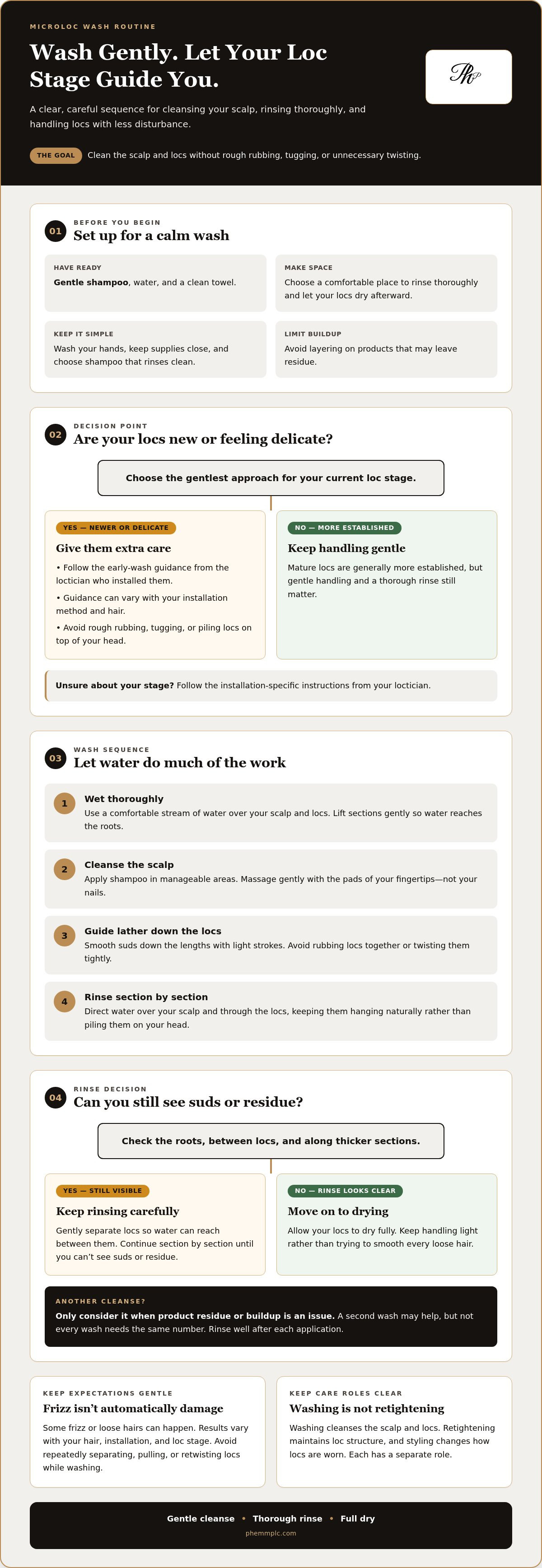
Move slowly and let water do much of the work. Keep your locs hanging naturally rather than piling them on your head, which can cause tangling and make rinsing harder. Follow your shampoo’s directions and your loctician’s guidance, especially if your microlocs are new.
Wet your scalp and locs, cleanse your scalp with shampoo, smooth the lather down the locs, then rinse until the water runs clear.
Cleanse the scalp and gently wash loc lengths
Wet your hair thoroughly. Use a comfortable stream of water across your scalp and locs. Lift sections gently so water reaches the roots.
Apply shampoo to your scalp. Work in manageable areas. Massage gently with the pads of your fingertips, not your nails.
Guide the lather along your locs. Smooth suds down the lengths with light strokes. Avoid rubbing locs together or twisting them tightly.
Rinse the first section. Direct water over your scalp and through the locs, then continue section by section.
These steps are a simple starting point for washing microlocs. Let the shampoo’s directions and your installer’s care instructions guide how you apply it. For another hair-care reference, you can read expert styling and maintenance resources online.
Rinse completely and decide whether another cleanse is needed
Rinse each section until you can’t see suds or residue. Gently separate locs so water can reach between them. Pay attention to areas where shampoo may collect, such as near the roots and along thicker sections.
Whether you need another cleanse depends on what’s in your hair and how much buildup you’re removing. If you’ve used products that leave residue, a second wash may help, but not every wash needs the same number. Rinse well after each application. A careful final rinse removes shampoo without vigorous scrubbing.
For individualized microloc care in Glen Burnie, explore microloc services at Phemmie's Place.
How to wash microlocs without worrying over every frizz or loose hair
A wash doesn’t automatically damage or unravel microlocs. Your experience can depend on how established the locs are, how they were installed, and how gently you handle them. Forceful rubbing, tugging, or repeatedly twisting locs can disturb them. Some frizz or loose hairs may appear, but that alone doesn’t mean your locs are damaged.
Think of wash day as caring for your scalp, not perfecting every loc. A few hairs may shift as you cleanse, and different heads of hair can respond differently. Light, steady handling is more useful than trying to keep every strand in place.
What to do when microlocs are new or feel delicate
Give newer locs extra care. Follow the early-wash instructions from the loctician who installed them, since guidance can depend on the installation and your hair. Use light pressure and avoid repeatedly separating, pulling, or retwisting locs as you wash. If you notice ongoing loosening or aren’t sure what you’re seeing, individualized loc-care guidance can help you decide how to proceed.
Rather than fixing each fuzzy spot while your hair is wet, pause and observe. Frequent handling can add disturbance. For another general reference on loc care, see this care resource.
How to reduce residue without over-washing
Use a manageable amount of shampoo and concentrate on your scalp. Rinse patiently, guiding water through each section. Adding more shampoo isn’t always the answer to a coated feeling. Layered products can leave residue along the scalp or loc lengths, so consider simplifying your product use and rinsing more thoroughly.
There’s no single clarifying schedule for every microloc wearer. Your scalp, products, and loc stage all shape what feels right. Avoid washing repeatedly to chase a perfectly smooth finish. If residue or loosening continues to concern you, personalized advice can help you adjust your routine.
How often to wash microlocs and how to dry them fully
There isn’t one wash schedule for every microloc wearer. Consider your scalp comfort, activity level, product use, and loc stage. If you exercise often or use products that leave residue, you may feel ready to wash sooner. If your scalp feels comfortable and your locs are new, follow your installer’s care guidance rather than forcing a calendar routine.
How often should you wash microlocs?
Use your scalp as a guide. Notice when it feels uncomfortable or when sweat and product buildup make a wash feel helpful. Pay attention to how your scalp responds afterward. This can help you adjust without washing more often than you need. For persistent or unusual scalp concerns, seek advice from a qualified professional rather than trying to address them by repeatedly washing.
Your routine may change with your activity, the products you use, and whether your locs are still at an early stage. Follow your installation-care instructions and make adjustments based on your comfort.
How to dry microlocs after washing
Gently squeeze excess water from your locs with a clean towel. Blot rather than rub, and avoid pulling or twisting them to speed things up. Let them hang freely in a comfortable space with airflow. Dense locs can hold water longer than their surface suggests, so allow time for them to dry fully.
Roots and inner sections need to dry fully because trapped dampness can contribute to lingering odor and discomfort. Once the outer locs feel dry, gently check near your scalp and within thicker sections. Don’t cover or style your hair while those areas still feel damp. Continue air-drying and check again before bed if needed.
Drying thoroughly is part of the wash, not an optional finishing touch. Choose a wash time that gives your hair room to dry before you cover it or style it.
For individualized microloc care in Glen Burnie, explore microloc services at Phemmie's Place.
Build a microlocs washing routine that supports ongoing loc care
A simple record can help you understand what works over time. After each wash, note the date, how your scalp felt, which products you used, and whether your locs dried fully. If your locs often feel coated after using several products, review your product routine and rinsing technique before changing your wash frequency.
Keep cleansing and maintenance distinct. Washing cleans your scalp and locs, but it doesn’t replace retightening or other care suited to your installation. A steady routine supports ongoing loc care; it isn’t a substitute for maintenance tailored to your loc stage.
Signs your washing routine may need adjustment
Recurring residue, damp inner sections, or scalp discomfort can be cues to review your routine. Change one habit at a time, such as using fewer layered products or allowing more time to dry. This makes it easier to notice what helps without assuming a particular wash schedule will solve every concern. Persistent or unusual scalp concerns call for individual professional guidance.
When professional microloc maintenance can help
If residue, loosening, or drying concerns continue, a loc professional can offer guidance suited to your installation and the maturity of your microlocs. Maintenance focuses on the locs themselves, while washing focuses on cleansing. Share what you’ve noticed and the routine you’ve followed so your care can be considered in context.
Learning how to wash microlocs is one part of caring for them with patience. Pay attention to your scalp, products, and drying habits, and keep washing separate from maintenance.
For appointment-based microloc care in Glen Burnie, explore microloc services at Phemmie's Place.
Make Gentle Microloc Care Part of Your Routine
A calm wash day starts with gentle scalp cleansing and light handling. Adapt your approach to your loc stage and installation guidance, rinse carefully, and give your roots and inner sections time to dry fully. There’s no single schedule for everyone, so notice how your scalp and locs respond and adjust thoughtfully.
Washing cleanses, while retightening and other maintenance support the locs themselves. If you’d like individualized support, Phemmie's Place offers professional microloc and Sisterlocks installation and maintenance, with one-on-one care from master stylist Phemmie in Glen Burnie.
Explore microloc care at Phemmie's Place and book an appointment for attentive support with your loc routine.
Frequently Asked Questions
Can you wash microlocs while they are still new?
New microlocs can be washed, but they may need gentle handling and timing suited to their installation. Follow the washing instructions from your installing loctician, since methods and loc stages differ. Avoid assuming every starter set needs to wait the same amount of time. Use a light touch and pay attention to how your locs respond. No routine can promise to prevent all frizz or loosening.
What is the best way to wash microlocs without unraveling them?
Wet your scalp and locs gently, then use your fingertips to cleanse the scalp without scratching. Smooth the lather down the loc lengths instead of rubbing locs together, and rinse thoroughly in manageable sections. Loc maturity and installation affect the care your hair needs, so no method can promise to prevent all frizz or loosening. If your locs are new, follow your installing loctician’s washing guidance.
Should you dilute shampoo before washing microlocs?
Dilute shampoo only if its directions or your care guidance recommend it. There’s no single dilution ratio for every shampoo and microloc routine. Use a manageable amount, apply it gently to your scalp, and rinse thoroughly so suds don’t remain between locs. If your microlocs are new, follow your installing loctician’s instructions before changing how you apply shampoo.
How do you dry microlocs after washing?
Gently squeeze excess water from your microlocs and blot them with a clean towel. Don’t rub or pull on the locs. Let them dry with airflow, then check the roots and inner sections, which may hold moisture after the surface feels dry. Drying time varies with loc density and length, so allow enough time and make sure your hair is fully dry before covering or styling it.
Can washing microlocs cause frizz?
Washing can leave some frizz, but frizz alone doesn’t mean your microlocs are damaged or unraveling. Your loc stage, installation, and handling can affect how your hair looks after washing. Keep your touch gentle and avoid repeatedly twisting or separating locs to smooth every loose hair. If you have ongoing concerns about frizz or loosening, seek individualized loc-care guidance rather than expecting one technique to eliminate it.
What should you do if microlocs still feel coated after washing?
Check whether you applied shampoo evenly and rinsed each section thoroughly. Product use and loc density can affect how residue feels, so avoid forceful scrubbing or adding several products at once. If the coated feeling continues, seek individualized loc-care guidance instead of following a fixed clarifying schedule. In Glen Burnie, one-on-one microloc care at Phemmie's Place can help you review your installation and routine.


Comments