


Sew In vs Braids: Compare Hair Loss Risk and Versatility

Neither a sew-in nor braids are automatically the better choice for your hair. In the sew-in vs. braids decision, the best fit depends on the style you want, how much tension your hair can comfortably handle, and the upkeep you prefer. Knotless braids can last 4 to 8 weeks with proper care, while a sew-in can last 6 to 8 weeks.
It’s natural to weigh the finished look against your hair’s comfort. Sew-ins and braids can both create polished protective styles, but they use different installation methods and can create different tension. If an installation hurts, speak up rather than pushing through the pain.
This comparison walks you through how sew-ins and braids are installed, their hair-loss risks, styling versatility, and how long they take and last. You’ll leave with a clearer sense of which option suits your hair, routine, and desired look.
Sew-in installation and hair-loss risks
A traditional sew-in starts with cornrows, then a stylist sews wefts onto the braided base. Braids also involve tension, but the pattern and added hair affect where you may feel the pull. Either style can stress your hair if installed too tightly. Pain, pinching, or persistent pulling means the style needs attention, not endurance.
For a sew-in, the braid-down should use even, light tension. A painful braid-down is too tight, and added weight can increase strain on natural hair. A trained professional can install a sew-in with care to help avoid excessive pulling. Knotless braids place less tension on the scalp than traditional braids, according to celebrity hairstylist Felicia Leatherwood. Still, any braid style can feel too tight if it pulls.
In a sew in vs braids comparison, consider how each style is attached and where tension might build.
Choose based on the attachment method, the look you want, and whether the style feels comfortable during installation.
How do you care for and maintain a sew-in versus braids? Wash and style a sew-in regularly, moisturize the hair underneath with an applicator bottle, and avoid excessive heat. For braids, keep the style clean and pay attention to pulling or discomfort while wearing them.
How should you prepare your hair for a sew-in or braids? Detangle your hair before installation and make sure it is fully dry before braiding. Wet hair can shrink as it dries, which may make the braids feel tighter.
How do you safely remove a sew-in or take down braids? For a sew-in, separate the thread from your natural hair before cutting it, then gently remove each weft. For braids, unravel each one slowly from the ends and use your fingers to separate shed hair without tugging through knots.
A microlink sew-in uses small beads or links attached to natural hair with a loop tool, then tightened with extension pliers. Unlike a traditional sew-in, it does not use a braided base. Notice discomfort around the links as well as at the scalp.
The sew in vs braids decision should account for comfort during installation and throughout wear. Excessive tension over time may contribute to hair loss. Pay attention to soreness around the edges or where braids or links attach. If the style becomes uncomfortable, do not ignore the pulling or add more weight.
Sew-in versatility and length
A sew-in can add volume and length right away, creating a visible change without waiting for natural hair to grow. The result depends on the weft length, texture, and installation pattern. Decide whether you want a subtle boost in volume or a longer, fuller look before choosing the arrangement.
The construction affects styling flexibility. A partial sew-in leaves some natural hair out to blend with the wefts. A closure sew-in uses lace or silk at the crown or top front instead. This choice affects parting options and which areas need to blend with your own hair.
A versatile sew-in can be worn down, in a ponytail, bun, or updo. A versatile closure sew-in combines a lace or silk closure with the ability to wear the hair in a ponytail or high bun. Think about your regular routine before selecting a construction, especially if you like to tie your hair back.
A vixen sew-in supports half-up, half-down styles and different partings. Its braid pattern is designed for those styling options. If you like switching between a center part and other partings, factor that preference into your choice.
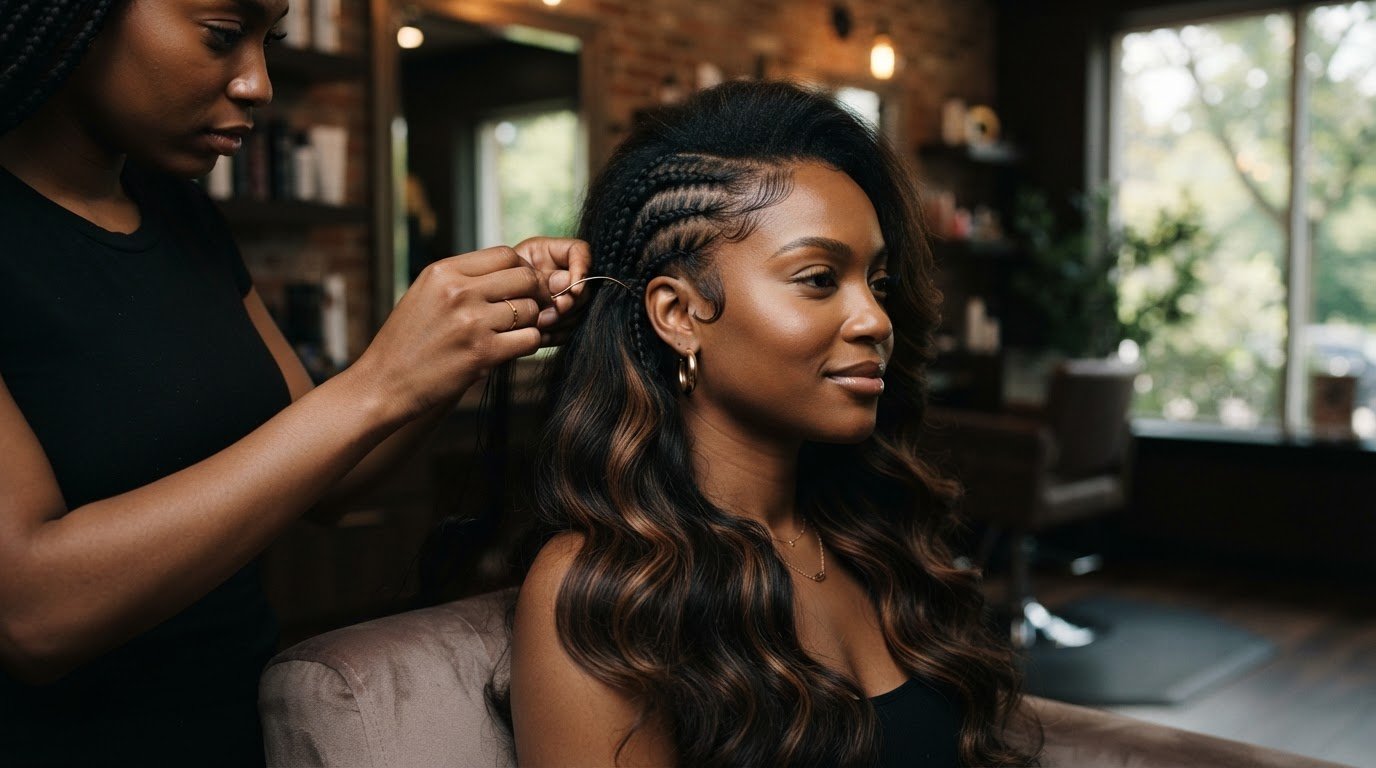
A braided sew-in combines two finishes: the front is braided, while wefts are installed at the back. It pairs visible braids with the added length and volume of extensions, unlike a style braided throughout.
Use these examples to narrow your choice:
Want length and volume? A sew-in can add both immediately.
Prefer ponytails or buns? Consider a versatile sew-in or closure sew-in.
Enjoy changing partings? A vixen sew-in allows different partings and half-up, half-down styling.
Like a braided front? A braided sew-in pairs a braided front with bundles at the back.
In a sew in vs braids comparison, consider whether you want loose wefts or a braid pattern throughout. Your everyday styling can help clarify the choice. Match the construction to your routine, whether you wear your hair down for work or tie it back for activities.
A second sew in vs braids consideration is the finished shape you want. A sew-in gives you several ways to wear added hair, while braids make the braid pattern part of the visible look. Picture your preferred finish, then choose the option that fits it. If you’re drawn to a braided finish, explore braided protective styles.
Traditional sew-in method
A traditional sew-in begins with your natural hair braided into a base. The stylist sews wefts onto those braids, building the shape track by track. The braid pattern depends on the design. A full sew-in braids all natural hair away, while a partial sew-in leaves some hair exposed for blending.
With a partial sew-in, leave-out usually sits at the crown, front, or around the edges. That hair helps conceal the wefts and blend them with the extensions. A closure sew-in uses lace or silk at the crown or top front instead of leave-out. A frontal sew-in uses a frontal piece that covers the hairline from ear to ear.
Track-by-track installation offers another variation. A stylist can sew 1 to 6 tracks onto one horizontal cornrow. This method may use less than 3 ounces of weft hair, or one pack or less. It suits a more focused placement of added hair rather than a full head of tracks. The number of tracks and the amount of hair depend on the style being built.
The braid-down also changes with the sew-in design. A lace frontal sew-in typically uses 5 to 7 straight-back cornrows. A closure sew-in with a middle part typically uses 6 to 8 beehive cornrows. More generally, a sew-in braid-down typically uses 6 to 12 cornrows. These are different layouts, not interchangeable instructions; each supports a particular placement and finish.
Leave-out needs attention while you wear the style. A center strip for a leave-out sew-in is roughly an inch wide and is typically flat-ironed to blend during the six to eight weeks of wear. This exposes some natural hair to styling, unlike a full sew-in, which braids all natural hair away. Consider whether you want to maintain a visible blend area before choosing leave-out.
Use the construction to compare your options:
Full sew-in: all natural hair is braided away, with none exposed.
Partial sew-in: hair remains out at the crown, front, and edges to conceal the weft.
Closure sew-in: lace or silk replaces leave-out at the crown or top front.
Frontal sew-in: a frontal covers the hairline from ear to ear.
Track-by-track: 1 to 6 tracks may be sewn onto one horizontal cornrow.
For a middle part, the closure pattern commonly uses 6 to 8 beehive cornrows. For a lace frontal, the typical pattern uses 5 to 7 straight-back cornrows. Those examples show why the base should match the placement you want, rather than relying on one standard braid-down for every sew-in.
How long do sew-ins and braids take to install?
Installation time changes with the style, braid pattern, and amount of hair being added. For sew-ins, distinguish the braid-down from the full appointment: several listed times cover only the cornrow base, not every step of the finished style. A track-by-track sew-in may take under 1 hour, while knotless braids take longer to install than traditional braids.
The braid-down time depends on the sew-in design. A lace frontal sew-in braid-down can take 25 to 40 minutes. A closure sew-in braid-down typically takes 30 to 45 minutes, while a leave-out sew-in braid-down typically takes 40 to 60 minutes. These ranges describe the base preparation, so don’t treat them as the full installation time.
Other braid patterns take longer to prepare. A vixen sew-in braid-down takes 60 to 90 minutes. A typical sew-in braid-down takes 30 to 60 minutes, but the style-specific range gives a clearer estimate when you already know the design. For example, choosing a vixen pattern means allowing more time for its braid-down than for a lace frontal base.
Track-by-track sew-in: may take under 1 hour.
Lace frontal braid-down: 25 to 40 minutes.
Closure braid-down: 30 to 45 minutes.
Leave-out braid-down: 40 to 60 minutes.
Vixen braid-down: 60 to 90 minutes.
These timing figures are not interchangeable. A track-by-track estimate applies to that sew-in method, while other ranges refer to braid-down preparation. The full appointment also includes the work needed to complete the style. A lace frontal and a vixen sew-in use different braid patterns, so preparation time can vary substantially.
For braids, the clearest comparison in the available timing information is relative: knotless braids take longer to install than traditional braids. The exact style you choose matters. Knotless braids, for example, need more installation time than traditional braids, so allow for a longer appointment when choosing that technique. Don’t assume that every braided style takes the same amount of time.
To plan an appointment, choose the style first, then use its matching time range where available. For a sew-in, decide whether you want a lace frontal, closure, leave-out, vixen, or track-by-track method. For braids, choose between knotless and traditional techniques. This gives you a more useful comparison than treating every sew-in or braid style as one category.
In short, the braid-down can take 25 to 90 minutes, depending on the sew-in pattern. A track-by-track sew-in may take under 1 hour, while knotless braids take longer than traditional braids. Use those details to plan around the specific style you want, rather than assuming the base preparation time equals the complete appointment.
How long do sew-ins and braids last?
A sew-in installation can last 6 to 8 weeks. Knotless braids can last 4 to 8 weeks with proper care. These ranges give you a practical comparison, but they describe different styles and shouldn’t be treated as a promise that every installation will reach the longest end. Consider the look you want and how much upkeep fits your routine.
The difference between those ranges may help shape your choice. A sew-in’s 6 to 8 weeks may suit someone planning around a longer wear period. Knotless braids’ 4 to 8 weeks offer a range that overlaps with sew-ins. The right comparison isn’t simply which number is larger. Think about the style’s maintenance and the time you want to spend wearing it.
For sew-ins, regular washing and styling upkeep are part of maintaining the look. Avoid excessive heat, which can contribute to damage. Plan for both tasks during the 6 to 8 weeks of wear, rather than treating installation as the only step. Your routine matters because the style still needs attention after the appointment.
Knotless braids can last 4 to 8 weeks with proper care. That care is central to the stated duration, so consider whether you can maintain the style consistently. The range doesn’t mean every set will look the same throughout wear. Your choice of style and your maintenance routine both affect how practical that window feels.
Sew-in: installation can last 6 to 8 weeks; regular washing and styling upkeep matter.
Knotless braids: can last 4 to 8 weeks with proper care.
Use the relevant timeline to plan your next style. If you want it ready for an event or a particular routine, count backward from your preferred date and consider whether the upkeep fits the time you plan to wear it. For a sew-in, include washing, styling, and avoiding excessive heat in your plan.
These ranges also help you think about removal and your next appointment. A sew-in’s 6 to 8 weeks and knotless braids’ 4 to 8 weeks are wear periods, not reasons to keep a style that feels uncomfortable. Plan for a careful take-down when you’re ready to change styles, and leave room for the maintenance your next look needs.
For the clearest decision, compare your preferred style with the time you can give its care. Choose a sew-in if its 6 to 8 week wear period and regular upkeep suit your plans. Choose knotless braids if their 4 to 8 week range and proper-care needs better match your routine. Either way, make maintenance part of the decision from the start.
Phemmie's Place: Knotless Braids
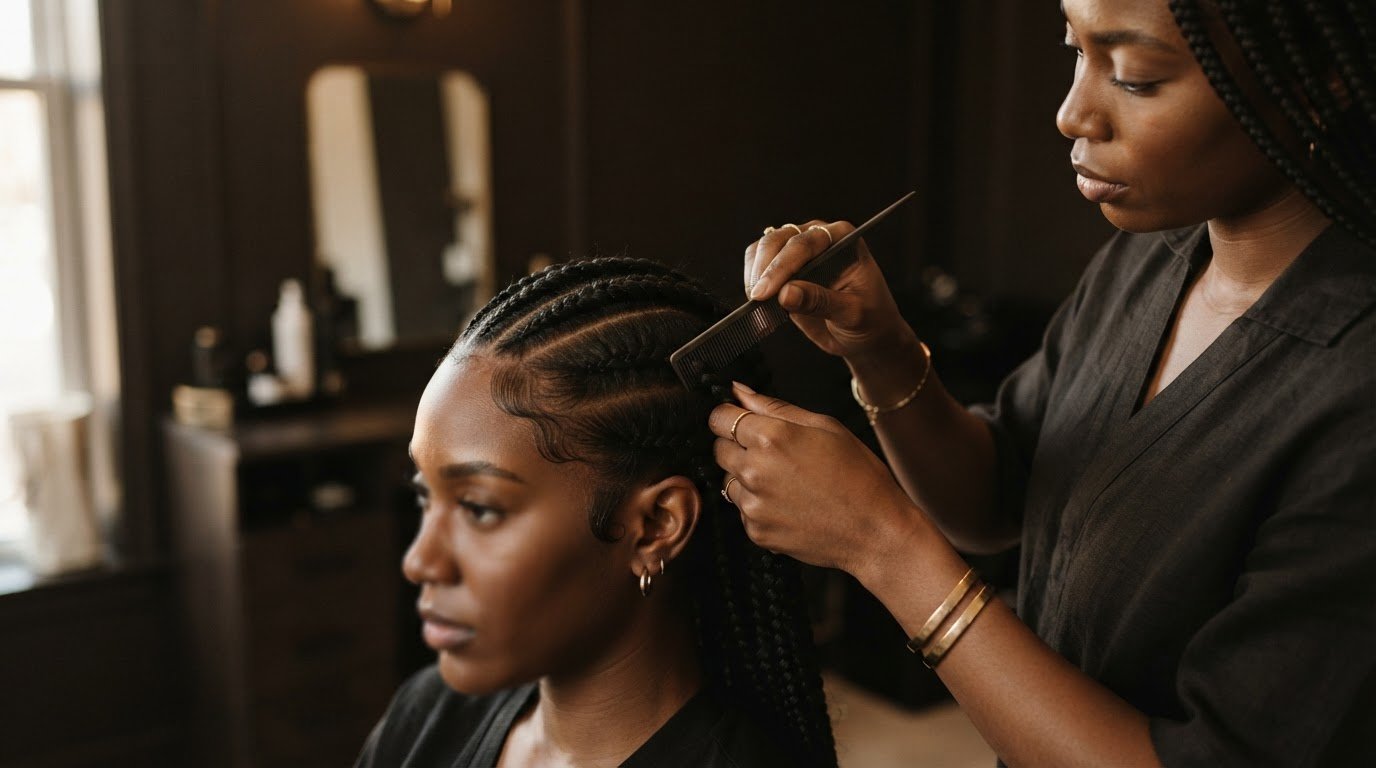
Phemmie's Place offers Knotless Braids for a braided look with less scalp tension than traditional braids. A professional installation helps avoid excessive pulling, so this style may suit you if scalp comfort matters in your choice. Consider the finish you want, too: Boho Braids and Box Braids offer other braided options, while Sisterlocks & Microloc Services suit a different styling path.
Share the look you have in mind and what matters to you for comfort. That makes it easier to choose a style that fits your routine and the appearance you want.
For a thoughtful next step, contact Phemmie's Place to talk about your braid style.
Choose the Style That Feels Like You
Your next style should fit more than a photo or a single occasion. Think about how you want to feel wearing it, how you like to present yourself, and whether you want a look you can change from day to day. That can make the sew-in vs. braids decision feel less like a contest and more like a personal choice.
Picture the style in your everyday routine. A comfortable look that feels like you is easier to enjoy and care for. You do not need to follow a trend or choose what someone else prefers. Start with the finish you feel best in, then take your next step from there.
If you’re ready to talk through a braided look, contact Phemmie's Place. Your next style can begin with a calm, thoughtful choice.
Frequently Asked Questions
Knotless Braids or Sew-Ins: Which is Best for Your Hair?
Knotless braids may suit you if you prefer an all-over braided finish, while a sew-in adds hair with options for parting and leave-out. Consider how you style your hair on a typical day. If you often wear a ponytail, look for a construction that supports tying your hair back. Comfort during installation matters as much as the finished look.
Final Verdict: Which One is Right for You?
The right choice matches your preferred look, comfort, and upkeep routine. Choose based on what you want to wear, not just the style’s name. If you like switching between loose and tied-back looks, consider how the installation supports those options. If you prefer braids throughout, prioritize a comfortable pattern that suits your daily routine.
What is the difference between a sew-in and braids?
A sew-in attaches wefts to a braided base or another foundation, while braids create the visible style by weaving sections of hair together. Consider where you want the added hair to sit. Wefts can add volume behind a braided front, while a full braided style shows the braid pattern across the head. The installation method shapes the finished look.
Which is better for natural hair growth and length retention: sew-ins or braids?
Neither style guarantees faster growth or length retention. Choose the option that lets you care for your natural hair without persistent pulling, excessive heat, or rough handling during removal. Consider whether you can care for the hair beneath a sew-in or keep braids comfortable while wearing them. Gentle installation, regular care, and careful takedown help limit avoidable stress on your hair.
What are the risks of sew-ins and braids, including traction alopecia?
Both styles can create tension, and excessive pulling may lead to hair loss, including traction alopecia. A sew-in can strain natural hair if its braid-down is too tight or the added hair pulls. Braids can also stress the scalp when installed tightly. If you feel pain during installation, speak up so the tension can be addressed rather than enduring discomfort.
Which styles and hair types are best suited to sew-ins versus braids?
Sew-ins suit people seeking weft-based volume, length, or options such as leave-out and closures. Braids suit those who want the braid pattern to define the finished look. Hair texture alone does not determine the choice. Consider your hair’s condition, the style you want, and the upkeep you are comfortable with. In Glen Burnie, start by describing the finish and daily routine you have in mind.

Comments