


Passion Twists Products for Moisture and Frizz Control

The best products for passion twists support moisture and help manage frizz: leave-in conditioner, a hair moisturizer or braiding lotion, and setting mousse. Passion twists are textured twists made with added hair. They can be crocheted onto cornrows or box braids, or created by twisting extension hair with natural hair. The style looks soft and defined, but can loosen or unravel over time.
Choosing products can feel tricky when you want your style to stay neat without weighing it down. Keep the routine light: use leave-in conditioner to support moisture, apply braiding lotion to help reduce frizz, and smooth on setting mousse after styling. Edge control and hair serum can also add finishing touches.
This guide explains what passion twists are and how to choose and use products for moisture and frizz control. You’ll also find practical tips for caring for your twists between wash days while keeping your routine manageable.
1. What Are Passion Twists?
Passion twists are two-strand twists made with wavy extension hair for a soft, textured finish. An installer can crochet prepared twists onto cornrows or box braids, or twist extension hair together with sections of natural hair. Freetress Water Wave hair is one option for the latter method. Crochet installation uses prepared twists attached to a braided base.
Choosing the hair begins with the installation method and the look you want. Freetress Water Wave hair typically comes in 20-inch or 22-inch lengths and has a medium-sized wave pattern. Freetress Bohemian Braid hair is another named option associated with passion twists. Before buying, compare the hair’s texture, length, color, and whether it comes pre-twisted. A crochet installation needs hair suited to attaching through a braided base; individual twists need hair that can blend into your own sections.
Braiding lotion or another hair moisturizer can help keep hair supple during installation and reduce frizz when applied through the twists. Use a small amount at a time, smoothing it over each section before twisting. Too much product can leave buildup or make extension hair feel coated, so apply light layers and focus only on the areas that need it.
Tangling, shedding, and unraveling are related, but each needs different care. Loose fibers can catch on neighboring twists, so separate them gently instead of pulling through a knot. Some shedding from added hair may occur as fibers loosen during wear. Avoid rough brushing, which can disturb the twist. Passion twists are more fragile than braids and may unravel over time. Keep your hands close to each section while twisting to create a tighter finish that is less likely to loosen quickly.
How much do passion twist products and hair extensions cost in the United States? Prices vary by product, hair length, pack size, and extension type. Compare the amount of hair included as well as the listed price. Your total also depends on which moisturizing and finishing products you choose, so plan around your installation method and routine rather than expecting one universal cost.
For a smoother start, gently detangle your natural hair, apply moisturizer in light layers, then install the twists using your chosen method. This helps limit snags during styling without treating every loose fiber as a problem.
The two installation methods create the style in different ways: passion twists can be crocheted onto cornrows or box braids, or made by twisting Freetress Water Wave braiding hair directly with natural hair.
3. Leave-in conditioner
Leave-in conditioner adds moisture without rinsing, making it useful for natural hair beneath passion twists. It can help keep your hair manageable during a protective style, but it doesn’t replace cleansing or scalp care. The best products for passion twists support your routine without leaving a heavy coating. Choose a formula that feels comfortable on your hair and apply it sparingly to keep the twists light.
Apply leave-in conditioner before installation to create an even foundation. Start with clean, damp hair, divide it into sections, and smooth a small amount through each section from roots to ends. Detangle gently before twisting. This order distributes the product through your natural hair instead of leaving a thick layer on the surface.
For an existing style, part the twists carefully to reach your natural hair. Use your fingers or an applicator nozzle to place a small amount along accessible sections, then smooth it in gently. Avoid soaking the twists. Excess liquid can leave the added hair damp for longer, while too much product may build up between wash days.
Let your hair’s texture and the product’s finish guide your routine. If leave-in feels sticky or leaves visible residue, use less next time. If your hair feels coated after layering products, pause extra applications instead of adding more. When choosing the best products for passion twists, focus on what suits your routine and how your hair feels, rather than using every product available.
Use leave-in conditioner thoughtfully alongside braiding lotion or hair moisturizer. For example, apply leave-in conditioner to clean, damp natural hair before installation, then use a light moisturizer on areas that feel dry during wear. Avoid applying several creamy products to the same section at once. A lighter approach helps maintain a neat finish and makes it easier to notice when your hair needs care.
Refreshing your style doesn’t require coating every twist. First, check whether your natural hair feels dry. Apply a modest amount where needed, smoothing gently instead of rubbing the twists together. If the style already feels product-heavy, focus on the exposed roots and skip another full-length application. This measured routine supports moisture while helping preserve the finished style’s texture.
For a calm, consistent routine, keep your leave-in conditioner accessible and use it after washing or when your natural hair needs moisture. If you’d prefer a professionally installed style to care for, explore professional twist styling.
4. Managing frizz in passion twists
Frizz often appears where loose fibers rub against clothing, bedding, or neighboring twists. Notice where it gathers first. If frizz is strongest near the ends, handle those sections gently instead of smoothing the entire style with more product. If flyaways cluster around the roots, use light pressure and avoid pulling them tight. A careful touch helps protect each twist’s shape.
For a quick refresh, smooth a small amount of braiding lotion over the frizzy section with your palms. Work from the middle toward the ends, then separate caught fibers with your fingers. Avoid dragging a brush through the twists, since it can pull out more fibers and disturb their texture. If the product leaves visible residue, use less next time instead of layering on another coat.
Friction during sleep can roughen the outer surface of passion twists. Cover your hair with a cap, or sleep on a satin pillowcase if that feels more comfortable. Before bed, gather the twists gently so they don’t snag beneath your shoulders. In the morning, release them slowly and smooth lifted sections with your hands. These small habits help limit friction without pressing the style flat.
Wash passion twists once or twice a month to help manage frizz. When washing, concentrate on cleansing the scalp, then let water run over the twists without rubbing them together. Gently press away excess water instead of twisting or wringing the hair. Rough handling can loosen the style and lift fibers along the lengths.
Keep moisture and oil light between washes. Applying oil to the twists and scalp every other day is one maintenance approach, but use only enough to cover the areas you intend to treat. Work in sections, parting the twists to reach the scalp, then smooth leftover product along the hair. If your twists begin to feel coated, reduce product rather than adding another layer. Buildup can make the finish look dull and uneven.
Protective styles still need gentle attention as they age. Check the ends and outer twists when refreshing your hair. If a section starts to loosen, avoid repeatedly twisting it tightly, which can stress your natural hair. Smooth surrounding frizz with your fingers, then cover the style at night. A calm routine, light product use, and less rubbing can help your twists stay neater between wash days.
Consistently covering your hair at night is a simple way to limit contact with surrounding surfaces and preserve a smoother finish while you wear your passion twists.
4. Which mousse or setting foam works best for passion twists?
Choose a setting mousse that spreads easily and leaves twists feeling light. Look for a foam that smooths flyaways without a sticky coating. Product names alone don’t tell you how a formula will feel on extension hair. The best products for passion twists suit your preferred finish without making the style feel coated. Start with a small amount and notice how the twists feel once it dries.
Apply mousse after installation, once the twists are arranged as you want them to sit. Dispense a little foam into your palm, then smooth it over a few twists from roots to ends. Use your hands rather than rubbing sections together. This gentle application distributes the product without roughing up the twist pattern.
Let the mousse dry before tying up your hair or covering it for sleep. If the twists still feel damp or tacky, wait before adding another product. Layering mousse over wet product can leave an uneven finish. Test a section near the nape or behind your ear to see how the foam dries without disturbing the whole style.
For maintenance, setting mousse can be reapplied every few days. Use less than you did after installation and focus on areas that need smoothing. If a few twists look fuzzy in the middle, apply a small amount there instead of coating every length again. This targeted refresh helps limit buildup and keeps the style from feeling weighed down.
Choose mousse based on your preferred finish and how your hair responds. If the foam leaves flakes or visible residue after drying, stop layering it and gently remove what you can with clean hands. Avoid mixing several styling products at once, since the combination may leave a film. Test a small section to see whether the formula suits your twists.
Setting foam is a finishing product, not a substitute for moisture care. Keep leave-in conditioner and mousse separate in your routine: conditioner supports natural hair, while mousse smooths and sets the installed style. Apply each sparingly and let the first product settle before adding the next. When choosing the best products for passion twists, consider each item’s role in your routine instead of adding more layers.
For a neat result, apply mousse after installation, let it dry fully, then refresh only the sections that need attention every few days. These simple steps help create a controlled finish without relying on a heavy layer of product.
5. What gel or edge control is best for passion twists without flaking?
For passion twists, use gel or edge control mainly to smooth your hairline, not to coat every twist. Choose a formula that feels comfortable, spreads easily, and doesn’t leave visible residue after drying. Careful application matters more than the product: thick layers and repeated touch-ups can leave residue on the hair. Start with a small dab and add more only if needed.
Keep your natural hairline separate from the added hair. Smooth a little edge control over the hairs you want to lay, using your fingertips or a soft brush. Let the product dry before tying on a scarf or touching the area again. Rubbing wet product can move it into small clumps, while adding another layer before the first dries can create a heavier finish.
Flakes can become more noticeable when products overlap. For example, gel applied over leftover mousse, oil, or dried edge control may not spread evenly. Before refreshing your edges, gently remove loose residue with clean fingers. Apply fresh product to the hairline instead of spreading it across the twists. This keeps styling product where you need hold and reduces unnecessary buildup along the lengths.
Test a new gel or edge control on a small section first. Smooth it onto a discreet part of your hairline, let it dry, then check the finish before styling the full perimeter. Look for visible specks, stiffness, or residue when you lightly touch the area. If you see flakes, don’t cover them with more gel. Gently remove the excess and use less product next time.
Use a different approach for flyaways along the twists. A light touch of braiding lotion or setting mousse is better suited to smoothing the lengths than heavy edge control. Keep each product in its lane: edge control for the hairline, mousse for the installed style, and leave-in conditioner for your natural hair. Applying one product at a time makes it easier to see what leaves residue.
For a polished finish, smooth the hairline once, allow it to dry, and avoid repeated brushing throughout the day. If the edges need refreshing, remove visible residue before reapplying a small amount. For a carefully installed twist style with a neat finish, book twist styling.
Phemmie's Place: Twist services
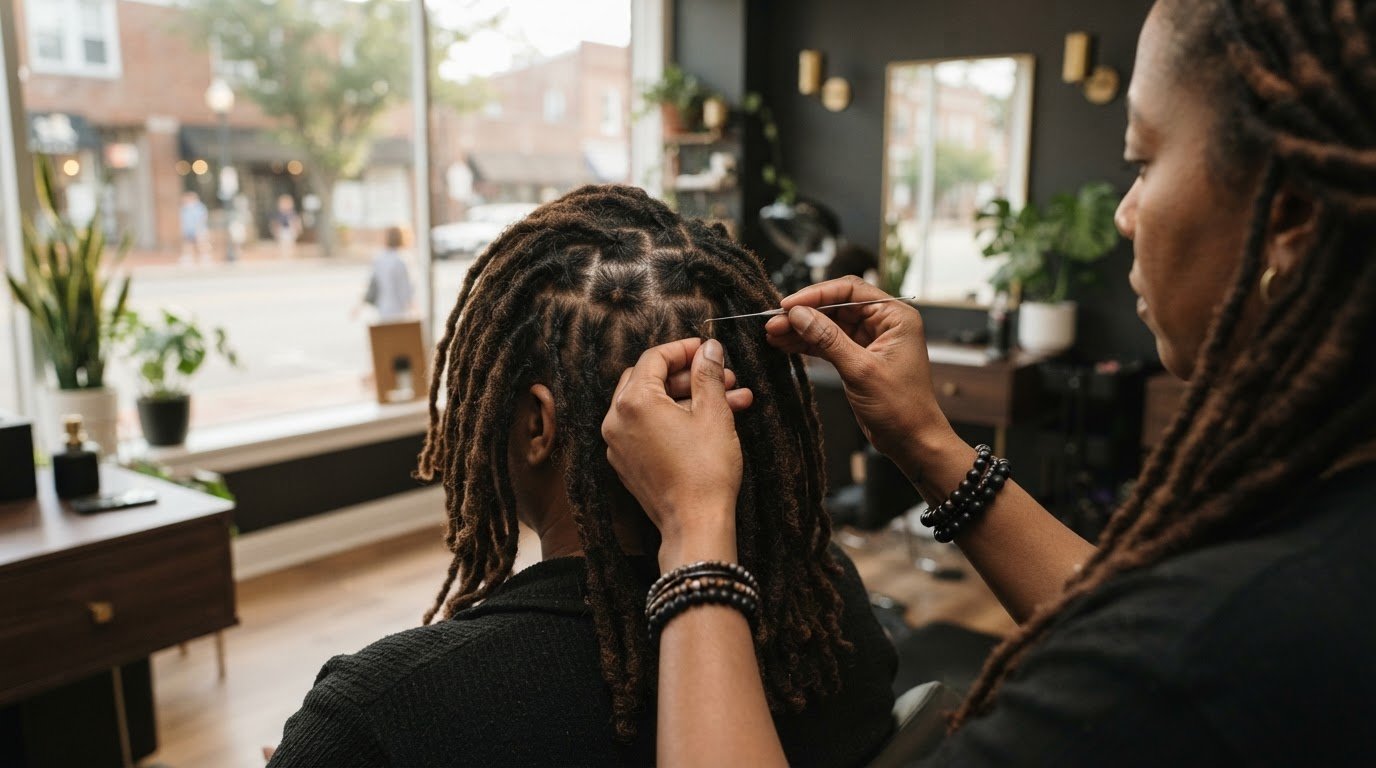
Phemmie's Place offers Twist Services for a carefully styled protective look in Glen Burnie. If you’d like help with installation or prefer to leave each step to a stylist, professional styling is a natural next step. Share the softness and shape you have in mind so your stylist understands the finish you’re seeking.
You can also explore Knotless Braids, Boho Braids, or Box Braids if you’re considering a different protective style. Each creates a distinct look, so choose based on how you want your hair to frame your face and move through your day. For one-on-one styling in Glen Burnie, book an appointment with Phemmie's Place. Spots fill fast, book your appointment today.
Choose a routine that feels right for you
Shape your care routine around how you want your twists to look and feel. The best products for passion twists are the ones you can apply gently and consistently without leaving your hair coated. Keep your routine simple, then adjust the amount of product based on your hair and your preferred finish.
If you’d rather enjoy a professionally styled look, consider twist services. You can also explore Knotless Braids, Boho Braids, or Box Braids for another protective style. Contact Phemmie's Place today to talk about the look you have in mind.
Take your time choosing a style that feels like you. A thoughtful routine and a look you love can make caring for your hair a calmer part of your day.
Frequently Asked Questions
What Are Passion Twists?
Passion twists are a protective style made with two-strand twists and textured extension hair. Depending on the look and installation method, an installer can attach prepared twists to a braided base or blend loose extension hair with sections of natural hair. This gives you options for how the style is built as well as how it looks. The result is a soft, distinct texture compared with conventional three-strand braids.
What hair is best for passion twists, including water wave and spring twist options?
Choose extension hair based on the texture and installation method you want. Freetress Water Wave hair has a medium-sized wave pattern and typically comes in 20-inch or 22-inch lengths. Spring twist hair is another option for a different twist texture. Compare the curl or wave pattern with your desired finish, then consider whether you’re installing individual twists or crocheting prepared twists onto a braided base.
What are the best products for installing passion twists?
Useful products for installation include leave-in conditioner, braiding lotion or another hair moisturizer, edge control, and hair serum. Each serves a different purpose: prepare natural hair with conditioner, use lotion to make sections more manageable, and reserve edge control for the hairline. Apply products in separate, light layers rather than combining several creams on one section. This makes it easier to work through the hair without leaving a heavy coating.
What products help moisturize natural hair under passion twists?
Leave-in conditioner and a hair moisturizer can support natural hair beneath the extensions. Apply leave-in to clean, damp hair before installation, working section by section so it reaches the strands underneath. During wear, use a small amount where your natural hair feels dry instead of coating every twist. Part the style gently to reach the roots, and keep the amount modest so your hair and extensions don’t feel coated.
How do you prevent frizz and keep passion twists looking fresh?
Reduce rubbing and handle the twists gently. At bedtime, use a cap or satin pillowcase to limit friction. During the day, avoid repeatedly brushing or twisting loose fibers. A little setting mousse can refresh the surface, while braiding lotion can smooth a fuzzy section. Apply either sparingly and avoid layering products over visible residue. These habits help maintain a tidy appearance without repeatedly disturbing the twist pattern.
How long do passion twists last, and how often should they be washed?
Passion twists can last six to eight weeks, although wear time varies from person to person. Washing once or twice a month can help manage frizz. Focus cleansing on your scalp and avoid rubbing the twists together as you rinse. Friction, product buildup, and how carefully you handle the style all affect how neat it looks over time. Remove the style if it becomes difficult to maintain.
How much do passion twist products and hair extensions cost in the United States?
The total varies with the hair and moisturizing or finishing products chosen.


Comments