


Wedding Guest Protective Styles for Windy Outdoor Ceremonies

A windy outdoor ceremony can make loose hair one more thing to manage. Wedding guest protective styles, including braids, twists, and locs, keep much of your hair gathered or secured, so you can focus on celebrating instead of frequent touch-ups. A well-chosen style can feel polished and practical, though no hairstyle is completely windproof.
It makes sense to want a look that suits the occasion and stays composed through the ceremony and reception. Protective styles offer options for different hair lengths and textures, with details tailored to your outfit and setting. The best choice depends on how secure you want your hair to feel and the look you have in mind.
Here, you’ll learn what protective hairstyles are, which options may suit a breezy outdoor wedding, and how they can simplify wedding-season styling. We’ll also cover preparation and care to help you choose a style with comfort, appearance, and wind in mind.
Wind and hairstyle considerations
Outdoor ceremonies bring open air, shifting breezes, and fewer sheltered places to reset your hair. With wedding guest protective styles, focus on securing the sections most likely to move. Wind can loosen exposed ends, lift face-framing pieces, and shift accessories. A style with a stable base can help you feel composed through the ceremony and photographs, though no hairstyle is completely windproof.
Consider the venue before choosing a finish. A rooftop ceremony may expose guests to stronger gusts than a sheltered garden, so styles that keep hair close and secure are sensible. Cornrows, braids, twists, and locs can gather hair instead of leaving every length loose. The best option depends on your preferred look, hair length, and how much movement you want around your face.
Long, loose sections have more room to move in a breeze. If you want visible length, a stylist can incorporate it into a braided or twisted look and secure the style so it feels intentional rather than vulnerable to every gust. For a softer finish, keep a few deliberate pieces around the face instead of leaving many strands loose. This helps the style stay polished while retaining a dressed-up feel.
Plan for small touch-ups, not a full restyle. Pack extra hairpins and elastics in a compact bag; they can help secure a shifted section before photographs or dinner. Keep them accessible rather than buried beneath gifts or a wrap. If a breeze lifts one piece, a quick adjustment can restore the shape without pulling at the entire style.
For a rooftop, prioritize a secure base and controlled ends.
For a garden, consider the breeze and how exposed the ceremony space feels.
For long lengths, decide which sections should move and which should stay secured.
For touch-ups, bring spare pins and elastics.
Preparation matters when you’re traveling to the wedding, too. Hair preparation can take two hours, so plan your appointment around travel and event plans to reduce last-minute pressure. Tell your stylist about the outdoor venue, your outfit’s neckline, and whether you prefer a sleek or soft finish. These details help shape a look that balances wind, length, and comfort.
Choose a style that feels secure without uncomfortable tension. A tight style is not a better wind plan if it causes discomfort. The goal is a thoughtful balance: hair held in place where the breeze can disturb it, with enough softness for a joyful outdoor celebration.
Benefits of protective styles during wedding season
A protective style can make your wedding look feel considered from ceremony through reception. Braids, twists, and locs keep hair arranged, so you can spend less time adjusting loose sections. In humid conditions, a style that works with your natural texture can also ease the urge to fight every change in the weather, helping a long outdoor celebration feel more relaxed.
There’s room for personal expression, too. A sleek braided look can complement a structured dress, while softer twists can suit a flowing outfit. An elegant style doesn’t need to compete with your clothes. Its shape, finish, and placement can bring the whole look together, whether you’re attending a garden ceremony or an evening reception.
Protective styling can simplify wedding-season plans, especially when several celebrations fall close together. A style that suits more than one outfit may reduce the need to rethink your hair for every event. Choose details that shift the mood, such as a side part with a formal dress or a softer arrangement with a daytime look. Comfort matters, since you may wear the style through photographs, dinner, and dancing.
To coordinate your hair with your dress, neckline, and accessories, consider the garment’s shape and details together. For example, an open neckline can pair well with hair swept away from the shoulders, while a high neckline may suit a style that keeps volume balanced above it.
Book once you know the wedding date and the style you want. Timing depends on the style’s complexity, hair preparation, and appointment scheduling, so settling those details early gives your stylist room to plan the service.
A stylist can accessorize braids, twists, locs, or an updo with a few accents placed to complement the style. Small, secure pieces can add polish without crowding the hair or competing with statement earrings.
Choose a style that suits the event’s length and your comfort.
Match the shape of your hair to the dress neckline.
Keep hair accessories coordinated with jewelry and outfit details.
For a refined look with a soft, detailed finish, consider knotless braids as part of your wedding-season styling plans.
Cornrows and classic braids
Cornrows and classic braids offer different ways to shape a polished wedding look. Cornrows follow the scalp in visible rows, while classic braids hang away from the head. Both can suit natural hair, but the desired finish, available length, and dress neckline help determine which approach feels right. A stylist can shape the pattern around a side part, center part, or swept-back finish.
Cornrows can be plaited with natural hair alone or with added pieces for thickness or length, while leaving the back out. This allows for a blended silhouette, such as neat rows across the front with loose curls behind. All-over rows create a more streamlined look. A stylist can adapt the row direction to frame your face or complement an asymmetrical neckline.
Classic braids offer another kind of versatility. Individual plaits can fall over the shoulders, gather into an updo, or be arranged to one side. For a wedding, placement can matter as much as the braid itself. Braids swept away from the face show off earrings, while a low arrangement can work with a dress that has detailed shoulders.
Think about how the style will look from several angles. A photographer may capture the front during the ceremony and the back during portraits. Cornrows with a braided or loose back can create contrast in those views. Gathering classic braids up reveals the neckline, while wearing them down brings length into the overall silhouette.
Before settling on a direction, share these details with the stylist:
Your preferred part, such as center or side.
Whether you want natural hair alone or added length.
The dress neckline and any statement earrings.
Whether you prefer braids up, down, or swept aside.
These choices guide the finished shape without relying on a trend that may not suit you. For example, a high neckline pairs naturally with a gathered style that keeps the shoulders clear. A strapless dress leaves more room for long braids to frame the shoulders. Your stylist can balance the pattern, length, and placement for an intentional look.
Comfort belongs in the decision, too. A style should feel secure without painful tension, especially if the celebration includes hours of photographs and dancing. Discuss your preferred weight and how you want the braids arranged. With those details, a stylist can create cornrows or classic braids that feel personal, versatile, and ready for the occasion.
Hair care and maintenance for protective styles
Care before and after installation helps your style feel comfortable through the wedding and beyond. Keep timing, tension, and simple maintenance in mind.
Installation Time and Style Longevity
Installation time depends on the style, length, and detail, while protective hairstyles can last anywhere from four to eight weeks. Preparing your hair can take two hours, so account for that when planning around travel or wedding events.
Knotless braids, cornrows, twists, and locs involve different amounts of sectioning and styling. A detailed pattern or added length can change the appointment time, so discuss your desired finish before the service. The wedding date matters, too: planning ahead leaves time for preparation without putting the appointment against travel or ceremony plans.
Longevity doesn’t mean every style will look unchanged throughout that period. Washing, moisture, friction, and tension all affect how your hair and style hold up. A style worn for a wedding may remain in place afterward, but its appearance depends on the care it receives. Ask for maintenance guidance suited to the specific style and your hair.
Preventing Tension and Hair Damage
A wedding style should feel secure without painfully pulling at your scalp. Excess tension can contribute to breakage, so braids, twists, or an updo should not be installed too tightly. Comfort during installation is useful feedback, not a detail to ignore.
Share any tender areas or concerns before styling begins. A stylist can adjust the grip, placement, or weight of the sections to reduce strain. For example, an elaborate updo doesn’t need to pull every section tightly backward to look neat. A balanced arrangement can keep the shape polished while easing tension around the hairline.
Maintenance supports both your natural hair and the finished style. Wash your hair regularly and keep it moisturized while wearing a protective style. At bedtime, a satin pillowcase or bonnet can help maintain the style and your natural hair. These habits matter in the weeks after the ceremony, not just on the wedding day.
Pay attention to how your scalp feels after installation and during daily wear. Pain or persistent pulling signals that the style needs attention. Avoid tightening a loose section by pulling surrounding hair harder; that can add strain instead of solving the problem. A stylist can assess the section and make a gentler adjustment.
For a wedding, align the chosen style, preparation, and care plan before installation. This conversation helps your stylist balance appearance with comfort and gives you a clear routine for washing, moisturizing, and protecting your hair afterward.
Which wedding guest protective styles work for natural hair and different hair lengths?
Natural hair can be styled in several ways for a wedding, and length influences the shape. Cornrows, two-strand twists, Bantu knots, and butterfly locs each create a distinct finish. A stylist considers your hair’s current length, the coverage you want, and how you’d like the style to frame your face. The best match balances your preferred look with a comfortable, secure arrangement.
Cornrows work with natural hair alone or with added pieces for thickness or length, while leaving the back out. This gives you options across lengths: close-to-scalp rows create a neat look, while a loose back adds shape and movement. Row direction changes the effect, too. Rows swept toward one side, for example, frame the face differently from a straight-back pattern.
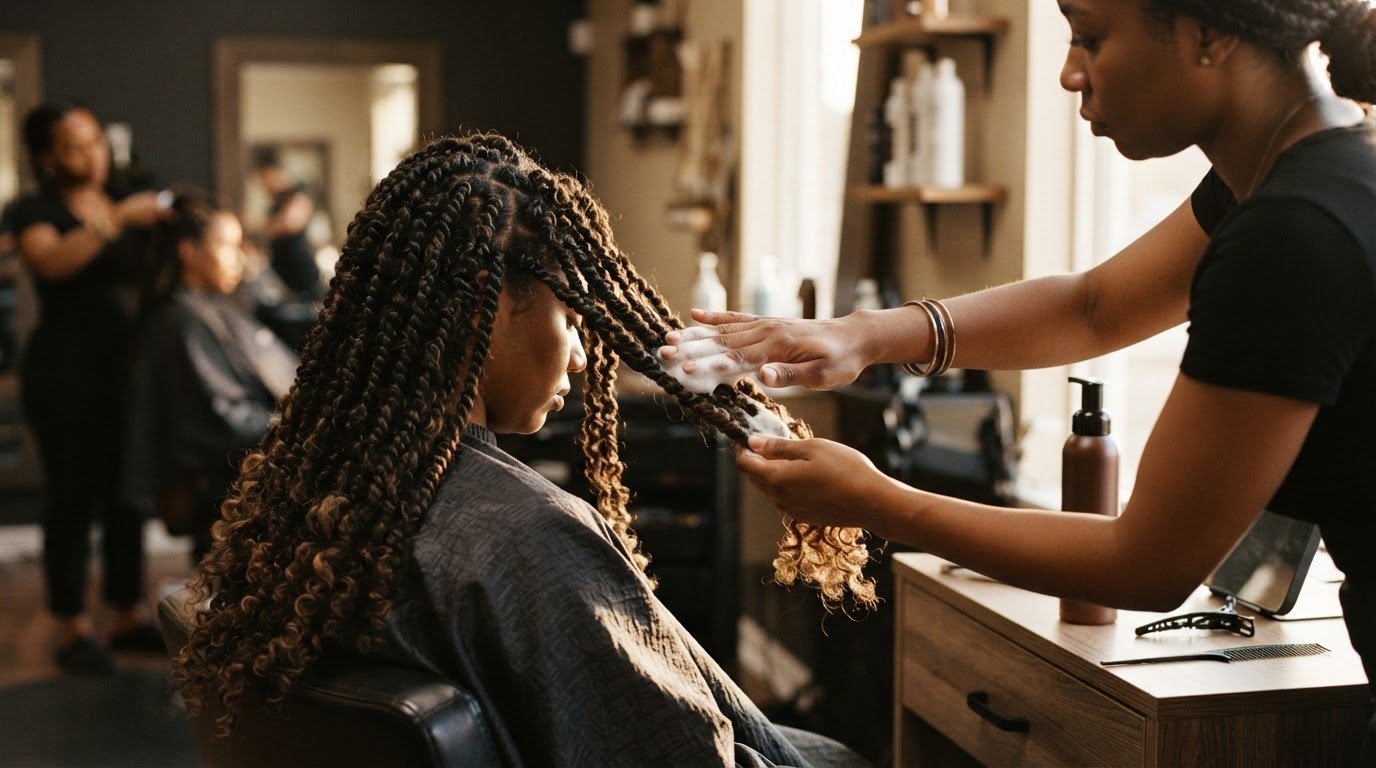
Two-strand twists offer a defined look while worn and another styling option afterward. Once taken out, they can reveal curls, so the same set can lead to a different natural texture. A stylist can vary the twist size and placement to suit your length and desired finish. Shorter twists create a compact shape, while longer twists bring more movement around the shoulders.
Bantu knots are made by sectioning, twisting, and coiling hair. Their sculpted shape can work as a complete wedding style, with knots arranged across the head for a deliberate finish. The size and placement of each section influence the overall look. A stylist can adapt the arrangement to your hair length and desired silhouette, keeping the result balanced with your outfit.
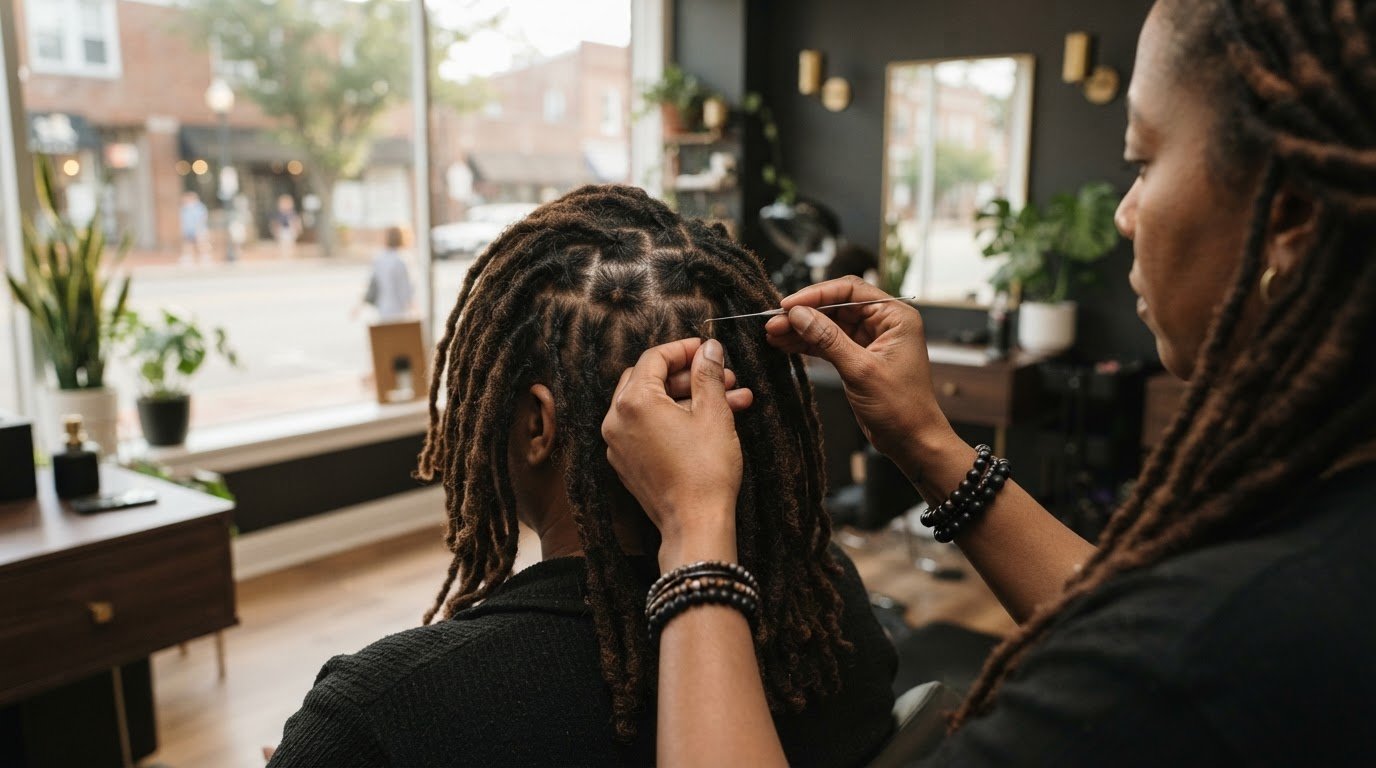
Butterfly locs use a crocheting method to create signature curly loops, while your natural hair stays braided for protection. The locs add a textured, expressive finish and can create the impression of more length. Their looped detail gives the style a softer look than a smooth braid. Discuss your preferred shape and overall fullness before installation.
Hair length is only part of the decision. Your natural texture, preferred part, and how much hair you want around your face matter, too. For example, a guest who wants an open neckline may prefer hair gathered away from the shoulders. Someone who wants visible length may choose a style that lets the ends fall freely.
Share your wedding outfit and styling preferences with the professional. A reference photo can clarify whether you want compact knots, defined twists, or textured locs. A stylist can then tailor the pattern and finish to your natural hair and desired length. Explore natural-hair styling options for a look shaped around your wedding plans.
Phemmie's Place
Phemmie's Place in Glen Burnie can help shape a wedding style around your natural hair, preferred length, and celebration plans. Explore options such as knotless braids, boho braids, box braids, and Sisterlocks and microloc services. A thoughtful styling conversation brings together your desired finish, outfit, and comfort preferences, so the look feels personal rather than chosen by trend alone.
Turn to the salon when you’re ready to plan a professional style for the ceremony and reception. Share the look you’re drawn to and the details that matter most, such as a secure shape or visible length. Contact Phemmie's Place to discuss your wedding styling.
Plan a look that feels like you
Your wedding-day hairstyle can be more than a finishing touch. Let it reflect how you want to feel as you greet friends, share photographs, and enjoy the celebration. As you choose wedding guest protective styles, bring together the mood you want, your outfit details, and the level of comfort that matters to you. A clear picture of your preferences gives your stylist a thoughtful place to begin.
Consider what feels most like you: a softly detailed finish, a defined shape, or a look with more length and movement. You don’t need every detail decided before reaching out. A conversation can help turn your ideas into a personal, considered style plan.
For a calm next step, contact Phemmie's Place for styling help and share the look you’re imagining. Your celebration is yours to enjoy, and your style can feel like a natural part of it.
Frequently Asked Questions
What Is a Protective Hairstyle?
A protective hairstyle arranges or covers much of your hair to limit everyday handling and keep strands gathered. Braids, twists, and locs are common examples, each with different finishes and ways to wear them. The term describes an approach, not one specific look. For a wedding, your stylist can shape the style around your natural hair, preferred silhouette, and the formality of the celebration.
Why Is a Protective Style Good For Wedding Season?
A protective style can simplify your look across a busy calendar of celebrations. Choose one that suits several outfits, then change its appearance with a part, arrangement, or accessory. This can be useful when traveling between events or if you want fewer styling adjustments during a full day. Comfort and suitability for your hair should guide the choice, not the wedding season alone.
What are the best protective hairstyles for wedding guests?
The best option depends on your natural hair, desired shape, and how you want to wear your outfit. Cornrows create a close, patterned finish; braids can be worn down or gathered; twists and locs offer distinct textures. Consider how the style will look in close-up portraits and from behind. A stylist can use those preferences to tailor the parting, placement, and overall silhouette.
What protective styles are elegant and formal enough for a wedding?
Braids arranged into a smooth, intentional shape, neatly placed twists, or well-groomed locs can all suit formal celebrations. The finish and styling details help set the tone. For example, a clean part and gathered arrangement may feel refined with a tailored outfit, while a softer shape can complement flowing fabric. Coordinate accessories with your jewelry for a balanced look.
What protective hairstyles work best for outdoor or humid weddings?
Choose a style that keeps the sections you want controlled in place while matching your preferred look. Braids, twists, and cornrows can be arranged in different ways for outdoor settings. A stylist can consider the ceremony location, how exposed the style will be, and how much hair you want loose. Carrying a few suitable touch-up items can help address small shifts during the event.
How can a stylist prepare and maintain hair before and after a protective style?
A stylist can discuss your preferred finish, hair condition, and preparation needs before installation, then tailor care guidance to the style. Afterward, regular washing and moisture help support your hair while you wear it. For guests in Glen Burnie, Phemmie's Place offers Braids Takeout/Wash & Blowdry Services to support care after braids are removed. Follow the maintenance guidance for your chosen style and natural hair.
How far in advance should I book a stylist and install a protective style for a wedding?
Book once you know the wedding date and the style you want. Plan around the style’s complexity, appointment scheduling, and hair preparation, which can take two hours, especially if you’re traveling.

Comments