


Starter locs for men in Glen Burnie: Rise time and pH examples

A rise-time check and a pH reading tell you different things. If you’re exploring starter locs for men in Glen Burnie, it helps to know what each observation can show before drawing conclusions.
It’s natural to want clear signs that your locs are developing as expected. But these checks aren’t interchangeable: a rise-time example lets you compare change over time, while a pH reading describes how acidic or alkaline the tested sample is. Neither result alone explains the whole picture.
This guide walks through examples of comparing starter rise times and measuring starter pH, then explains how to interpret each check without treating it as a universal pass-or-fail test. You’ll also see what these observations can and can’t tell you about your starter locs.
Where can men get starter locs in Glen Burnie, Maryland?
For starter locs for men in Glen Burnie, start by looking for a salon that clearly offers loc installation. A general braiding menu may not tell you whether the stylist starts locs. Look for terms such as starter locs, loc installation, or microlocs, then read the service details carefully. This helps distinguish loc-focused services from styles that only resemble locs.
Use the salon’s service information to understand what an appointment covers. Check whether it describes a consultation, parting, installation, or a particular starting method. These details help you decide whether the service matches your goal. If you want a neat grid, look for information about sectioning. If you prefer a softer, less uniform appearance, note whether the service description addresses that preference. This gives you a more focused conversation about the look you want.
Situation: A man in Glen Burnie wants starter locs but hasn’t chosen a method. Action: He finds a loc service description and notes its stated methods, hair preparation, and consultation details. Result: He can discuss a specific starting approach instead of asking only for “locs.” The service description gives both the client and stylist a clearer starting point.
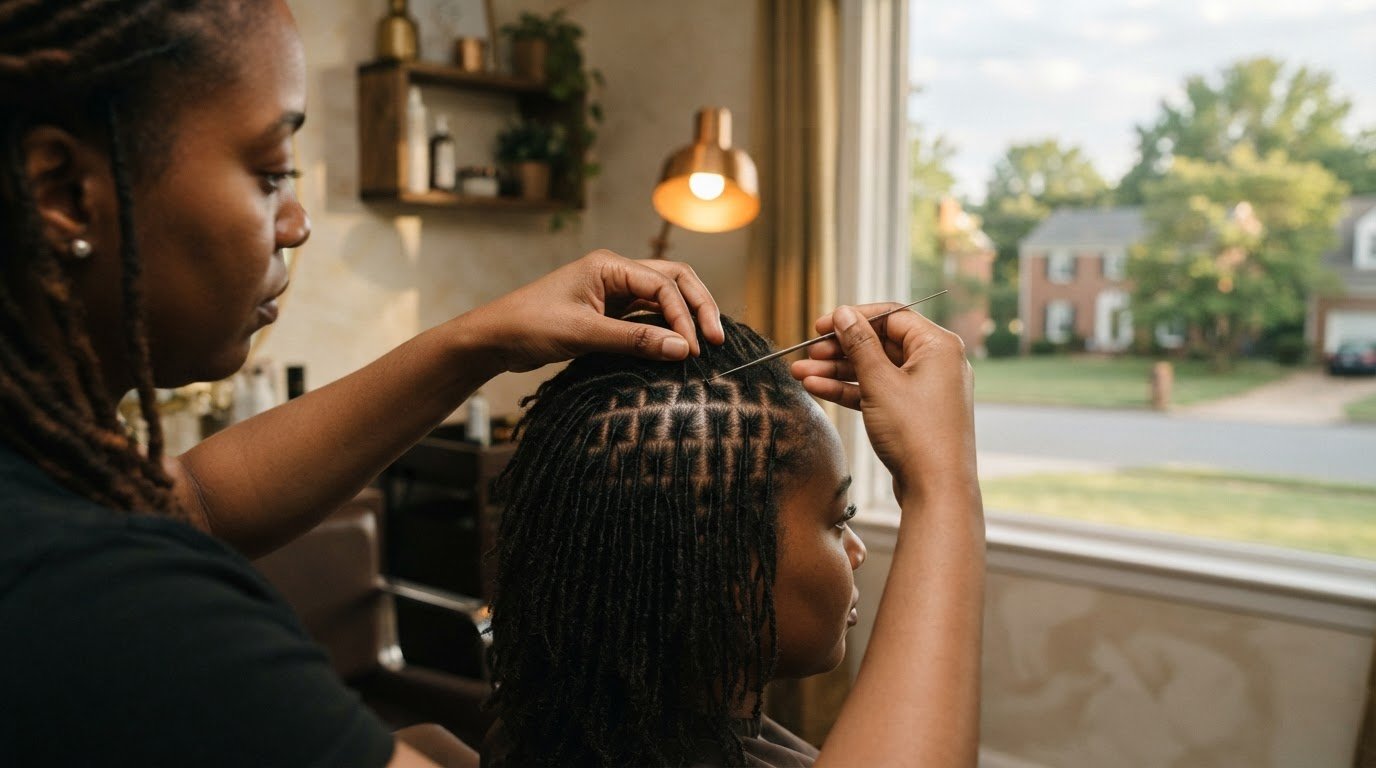
Look at examples of completed starter work when a salon presents them. Focus on visible details such as parting patterns, loc size, and how the roots sit. A photo can help you describe your preferences, but it doesn’t mean your hair will produce an identical result. Bring an example that reflects your desired direction, then explain what you like about it, such as compact sections or a fuller appearance. Specific visual references make the discussion more useful.
Before booking, organize the key details you want to discuss: your preferred loc size, the general look you’re aiming for, and any questions about maintaining the style. Keep the conversation centered on your hair and the salon’s stated loc service. If a description mentions microlocs but you want a different size, ask how the approaches differ. This helps clarify expectations before scheduling an appointment.
Search Glen Burnie salon information for loc installation, not just braiding.
Review the stated method and appointment details.
Use a clear photo or description to explain your preferred loc size and look.
Which Glen Burnie locticians specialize in starter locs for men?
A loctician’s specialization shows in the work they describe and demonstrate. For starter locs, look for clear references to loc installation, starting methods, sectioning, and early maintenance. A profile focused only on braids doesn’t explain whether the stylist installs locs. In Glen Burnie, read service descriptions closely and distinguish starter locs from established-loc maintenance. That helps you understand whether the work matches the stage you’re seeking.
Examples of starter work can show how a loctician approaches parting and loc size. Examine images for consistent sections, neat roots, and the overall shape of the finished style. A close-cropped example may help you picture a compact look, while an example with larger parts can show a fuller appearance. Treat photos as references, not promises of identical results. Hair texture, length, and chosen method all affect how a style looks on you.
Situation: A man wants starter locs with defined sections but hasn’t settled on a technique. Action: He reviews a loctician’s examples and identifies the parting pattern and loc size he prefers. Result: He can describe the desired finish clearly during the appointment discussion. This turns a broad request into details a stylist can assess, including whether the reference suits his hair and chosen method.
A loctician’s specialization is also visible in how they explain the process. Look for information about preparing the hair, creating sections, and forming the initial locs. Clear explanations help you understand what happens during installation and what care follows. For example, a profile that distinguishes starter installation from retwisting shows that the stylist describes separate stages of loc care. This gives you a more precise basis for discussing your goals.
Situation: Someone has a photo of a style but doesn’t know its method. Action: He shares the reference and explains which details matter, such as neat parts or a natural-looking outline. Result: The loctician can discuss how the desired appearance relates to the starting technique. A photograph works best alongside a plain description, because lighting and styling can hide details about the roots.
Before settling on an appointment, organize the main points you want to address: your preferred size, the look you’re aiming for, and questions about installation. A focused conversation can show whether the loctician’s stated experience aligns with your priorities. For men considering starter locs in Glen Burnie, these concrete details are more useful than a broad label like “loc expert.”
What are the appointment wait times and booking requirements for local locticians?
In Glen Burnie, a loctician’s next opening depends on the appointment calendar and the service requested. Starter loc installation can involve sectioning and forming locs across the scalp, so choosing the right appointment type matters. A simple inquiry about “locs” may not provide enough detail to identify the right booking slot. Say that you want a new installation, then share your preferred method and general loc size. Those details help the salon understand what you’re booking.
There isn’t one wait time that applies to every local loctician. Openings change as clients book, reschedule, or choose different services. Check the booking calendar for available dates, and see whether it lists installation appointments separately from maintenance. If it shows only general appointment types, follow the booking instructions to choose the closest match. Selecting the right service helps avoid reserving time for a different stage of loc care.
Situation: A client wants starter locs before a planned event but hasn’t chosen an installation date. Action: He checks the calendar, identifies suitable openings, and selects the starter service rather than maintenance. Result: He can plan around an actual appointment option instead of assuming a particular wait. This also shows why flexibility helps: considering another available day can make scheduling simpler.
Booking requirements vary by salon, so read the appointment instructions before submitting a request. Look for the service name, any hair-preparation directions, and the steps for confirming a reservation. Don’t assume every booking form asks for the same information. One form may ask you to describe your hair length, while another may ask you to choose a method. Follow the instructions shown for that appointment.
Prepare a concise description before booking. Include the service you want, your preferred loc size, and whether you have a method in mind. Add a reference photo only if the booking process allows it. If you’re unsure between coils and twists, say so rather than selecting a method at random. A focused request gives the loctician useful context and helps direct the appointment toward your goals.
Review the calendar for current openings instead of relying on a general estimate.
Select starter installation rather than maintenance when booking new locs.
Follow the salon’s stated booking steps and share relevant style preferences.
Before finalizing, read the confirmation details and note the appointment date, selected service, and any preparation instructions. If something in the booking record differs from your request, resolve it through the listed booking channel before the appointment. This last step keeps your schedule and service details aligned. For a clearer starting point, review starter loc appointment information and use the details that fit your plans.
If a raisin mixture is part of a separate preparation routine, it should be shaken and opened several times a day for 5 to 7 days. Keep that instruction distinct from the salon’s booking directions, and follow the appointment requirements shown for the service you selected.
Which starter loc methods are available, such as coils, twists, or interlocking
Coils, two-strand twists, and interlocking are distinct ways to begin locs. Each creates a different starting pattern, so the choice affects the look of your new locs. A stylist considers your hair, preferred parting, and desired size before recommending a method. For example, someone who likes visible, rope-like sections may prefer twists. Someone seeking compact, rounded starters may ask about coils.
Coils: The stylist parts the hair, then shapes each section into a coil. This method creates a rounded starter with a defined direction. It may suit someone who wants individual locs formed from small sections. Section size influences the eventual appearance, so share whether you prefer a fuller look or narrower locs. A reference photo can help communicate the difference.
Two-strand twists: The stylist divides each section into two strands and twists them around each other. This creates a visible, rope-like pattern at the start. For example, a man who likes the look of defined twists may choose this approach as his locs begin. Twist services can also create a temporary style, so explain that you want twists intended as starter locs.
Interlocking: This method passes the loc through its root section to secure the starter. The stylist works through each section with a consistent pattern. If you’re considering interlocking, ask how the method will shape the roots and locs. Choose based on the look you want and the technique the stylist plans to use, not simply the method name.
Situation: A client wants starter locs but feels unsure about the method. Action: He describes the appearance he wants, then discusses coils, twists, and interlocking with the stylist. Result: The conversation focuses on visible differences and a suitable plan, rather than guessing from method names alone. This gives the stylist useful direction while leaving room to assess the hair.
Parting is another choice to discuss. A grid pattern creates orderly sections, while less uniform parting changes the overall layout. Pair your parting preference with the starter method. For instance, someone requesting two-strand twists can also describe whether he wants neat rows or a more organic arrangement. The method forms each starter; parting determines how the starters sit across the scalp.
Before installation, settle on three details: method, approximate loc size, and parting style. Bring a reference image if it shows the roots clearly. Ask the stylist to explain how the chosen technique will create the look you want. A thoughtful discussion helps align your expectations with the installation plan.
How should men choose a starter loc method based on hair type and desired loc size
Start with your hair’s texture, density, length, and the look you want. These details shape how coils, twists, or interlocking may work for your starter locs. Hair texture describes how strands bend or form patterns; density describes how much hair covers your scalp. For example, a man with dense hair who prefers compact locs should discuss section size before choosing a method. The stylist can consider your hair alongside the result you want.
Length matters because the starter must hold its form while the stylist works. Shorter hair may affect which technique creates a stable starting shape. Longer hair offers more length to form coils or twists, but the finished appearance still depends on sectioning. Share your current length and show a reference for the loc size you like. This gives the stylist practical details to consider instead of relying on a method name alone.
Situation: A man wants narrow locs but has dense hair. Action: He shows a photo, describes the desired size, and asks how sectioning will suit his hair density. Result: The stylist can discuss a parting plan and method that support the requested look. The method forms each starter, while the size and number of sections shape the overall pattern.
Consider how each method will look with your hair and preferred finish. Coils create rounded starters, while two-strand twists leave a visible twisted pattern. Interlocking forms starters by passing hair through its root section. If you want a twist pattern, discuss twist styling options and clarify that your goal is starter locs. A conversation can separate a temporary twist style from twists intended to begin locs.
Your parting preference also influences the result. A grid gives the sections an orderly layout; less uniform parts create a different visual arrangement. A man seeking a clean, structured look can request neat rows and explain his preferred loc size. Someone who wants a softer pattern can describe that instead. The stylist then considers how section shape, hair density, and the chosen method work together.
Bring three useful details to the method discussion: your preferred loc size, a clear reference image, and your hair’s current length. Add notes about areas where density or texture differs across your scalp. For instance, a thinner crown may need consideration when planning sections. These details help the stylist assess your whole head, rather than choosing a technique based on a single feature.
Situation: A man likes the appearance of coils but prefers a rope-like finish. Action: He explains both preferences and asks the stylist to compare coils with twists for his hair. Result: They can weigh the visible starter pattern against his desired loc size before settling on an approach. A useful discussion connects method, hair characteristics, and the look you want.
Raisin mix ferments at 70 degrees or warmer. Starter ferments at room temperature for 8 hours or overnight, then another 8 hours after remaining water and flour are added. An occasional or weekend baker refreshes refrigerated starter twice before use; afterward, feed it equal weights of water and flour.
Phemmie's Place
Phemmie's Place in Glen Burnie offers loc-related styling, including Sisterlocks & Microloc Services. If you’re considering smaller loc styles, share your preferred size, a reference image, and questions about your hair to keep the discussion focused on your priorities.
If you’re still weighing starter loc methods, use the examples in this guide to describe the finish you want. For another protective-style direction, we also offer Knotless Braids, Boho Braids, and Box Braids. Book an appointment with Phemmie's Place in Glen Burnie to discuss your hair goals and next steps.
Make your next style choice with care
Choosing starter locs for men in Glen Burnie can be a personal step toward a look that feels distinctly yours. Before moving forward, decide what matters most: the shape of your parts, your preferred size, and how you want the style to express you. A clear picture of those priorities can make your next conversation more meaningful.
Phemmie's Place in Glen Burnie offers loc-related styling and protective-style alternatives. Alongside Sisterlocks & Microloc Services, we offer Knotless Braids, Boho Braids, and Box Braids. Explore these options and book an appointment to discuss the look that feels right for your hair and routine.
Share your preferences and questions in a calm, focused conversation. Contact Phemmie's Place to discuss your styling goals. Your next style can begin with a thoughtful choice and a little confidence in the direction you want to take.


Comments