


Low Maintenance Protective Styles for Moms by Upkeep

The easiest style to wear isn’t always the most protective. Low maintenance protective styles for moms can reduce daily styling, while protective styles tuck hair away to limit everyday wear. Some styles do both, but they still need thoughtful upkeep.
When your day is full, it makes sense to want a style that saves time and feels comfortable. The key is finding one that fits your routine without confusing low manipulation with protection: low manipulation means handling your hair less, while a protective style covers or secures the ends.
This guide compares styles by upkeep, budget considerations, and lifestyle, then explains how to prepare natural hair before an appointment. You’ll also learn where crochet styles and faux locs fit, and how care can help keep a style looking fresh. Use these comparisons to find an option that feels manageable for your days and gentle on your hair.
1. Bantu knots, goddess braids, and passion twists
For moms choosing low maintenance protective styles for moms, the best fit depends on desired upkeep, comfort, and the finish you enjoy. Bantu knots can be worn for up to 2 weeks, while box braids can last up to 8 weeks with the right care. Goddess braids and passion twists offer other looks, but their suitability depends on your routine and preferred level of daily attention.
Bantu knots form compact, secured sections against the scalp, creating a sculptural look without a long-wear installation. Goddess braids have a softer finish, often with loose pieces that add movement. Passion twists use a rope-like texture, distinct from plaited braids. Discuss the shape and feel you want with your stylist, including how the style will frame your face.
Box braids and knotless braids keep hair in individual plaits. Knotless braids begin with natural hair, with extensions added gradually, while box braids have a defined starting point. Braid size and installation method affect the finished style, so explain whether you prefer smaller sections or a fuller look. Cornrows sit close to the scalp and can create a streamlined base that keeps hair away from your face.
Twists, including passion twists, wrap sections around one another rather than forming three-strand braids. Crochet braids use extensions attached through cornrows, unlike individual box braids. For example, crochet braids may suit someone who wants extensions installed over a cornrow base. Among low maintenance protective styles for moms, the right technique depends on how you want to wear and care for the style.
Protective styles should not be kept in longer than two months because hair can become dehydrated and scalp tension can increase. Allow at least one week between styles, ideally two weeks, to give your hair a break. Use these limits for planning, while paying attention to comfort throughout installation and wear.
Tight braids or twists can place tension on the scalp, especially near the hairline. Continued pulling can contribute to breakage or traction-related hair loss. A style should not cause persistent pain. If you feel pulling during or after installation, tell your stylist so they can address the tension rather than tightening or securing the style further.
For removal, a professional can undo braids or twists section by section, separate shed hair, and detangle carefully. A wash and blowdry can follow, with a pause before another installation. This careful sequence avoids rushing through knots or forcing a comb through tangled hair, giving your strands a gentler transition between styles.
A rubber-band updo can be another look to discuss with your stylist alongside these styles. One example of braiding hair recommended for a rubber-band updo is 48″ long. When weighing this option, consider whether you like the finished shape and whether its installation feels comfortable for your scalp. Ask what the style requires before committing, and make clear that ease of wear and a comfortable fit matter more than keeping a look that causes discomfort.
Choosing a professionally installed protective style based on budget, lifestyle, and maintenance needs
Start with your weekly routine, then compare upkeep and installation needs. A style that looks beautiful in a photo may not suit school runs, work, exercise, or frequent washing. Share those details with your stylist so your choice reflects how you actually wear your hair.
Budget involves more than the appointment itself. Consider the style, hair used, installation time, and care needed afterward. Before booking, review the price for your chosen style. A lower-maintenance option may mean fewer styling steps at home, while a detailed look may need more attention to preserve its finish.
Installation time depends on the technique, hair length, density, and desired size. Individual braids involve sectioning and working through each part, while cornrows follow rows close to the scalp. Crochet braids use extensions attached to a cornrow base. These differences shape the installation process, but no single style is quickest for every head of hair. If chair time matters, discuss simpler designs and methods before choosing.
Cornrows or crochet braids can be practical options to discuss when a streamlined installation is your priority. Individual braids offer more flexibility in how you part and style your hair afterward. The best choice depends on your hair’s texture and length, the look you want, and how much daily handling fits your schedule. A stylist can assess these factors during a consultation and explain how each technique will work with your hair.
Care also shapes the decision. Mielle recommends keeping most protective hairstyles in for about 6 weeks. Your stylist can set a cleansing and conditioning routine suited to the installation and your scalp, rather than applying one schedule to every style. During a professional appointment, the stylist can cleanse gently, work between sections as the style allows, and avoid rough handling that disrupts the finish.
Ask for a simple nighttime routine before you leave. For example, your stylist may suggest loosely gathering longer braids and covering your hair with a scarf or bonnet to reduce friction while sleeping. Your routine should protect the style without pulling tightly at the hairline. If a style feels uncomfortable during the day or night, tell your stylist rather than tightening or securing it further.
Share your priorities clearly: installation time, preferred look, daily routine, and care you can maintain. Then choose a style with the stylist’s guidance, not by appearance alone. Explore professional braids and twists as options for a tailored installation.
3. Faux locs and boho locs
Faux locs create a loc-inspired look without locking your natural hair. A stylist can wrap extensions around braided natural hair or crochet locs onto cornrows. These methods create different foundations, affecting how the style feels and sits against your scalp. Faux locs may suit you if you enjoy the appearance of locs but want a temporary style.
Boho locs have a softer, more textured finish, often combining loc-like strands with loose, curly pieces. This detail creates movement, but the loose sections need more attention than a uniform loc style. If you prefer a neater look with fewer loose strands to manage, a classic faux loc finish may better suit your routine.
Discuss the look and installation with your stylist before your appointment. Describe your preferred loc size and overall fullness. Decide whether a braided or cornrow base better suits the planned crochet method. Then discuss extension texture and how much loose or curly detail you want. These choices help the stylist plan a cohesive finish rather than relying on a reference photo alone.
Natural hair length and density can influence how the base is prepared and how the finished locs sit. A professional assesses your hair before choosing sections and attaching or wrapping extensions. For instance, a crochet installation uses cornrows as its foundation, while a wrapped style begins with braided natural hair. Your stylist can explain which approach best supports your preferred shape and parting.
Faux locs and boho locs also differ in upkeep. Loose curls in boho locs can catch or tangle, so handle them gently and separate them carefully as needed. A more uniform faux loc style avoids that particular loose-curl detail, though the scalp and roots still need considerate care. Follow your stylist’s cleansing and drying instructions, since the installation method affects how easily you can reach the base.
Choose faux locs or boho locs based on the look you enjoy and the routine you can maintain. Bring a few reference images showing loc size, curl placement, and length. Ask your stylist to explain the base, installation method, and upkeep before choosing a design. Those details make it easier to compare a polished faux loc look with the freer texture of boho locs.
3. Preparing natural hair professionally before styling
Professional preparation starts with an assessment, not an installation. The stylist checks your scalp, hair length, density, and current condition, then discusses your desired style. For example, fine sections may call for a different braid size than thicker sections. This conversation helps shape a plan around your hair and the finished look.
Next, the stylist detangles your hair in manageable sections. Working from the ends toward the roots can help reduce unnecessary pulling. The stylist can also identify knots, shed hairs, or areas that need extra care before braids, twists, or cornrows begin. Clear sectioning makes the installation easier to plan and helps avoid rushing through tangles.
Clean hair gives the stylist a fresh starting point. A professional wash removes buildup from the scalp and strands before a protective style is installed. The stylist then conditions and carefully detangles your hair. Hair should be thoroughly dried before installation, especially when the chosen style keeps sections tucked away.
Moisture is part of preparation, but the approach should suit your hair and planned style. A stylist can provide suitable conditioning care before drying, then make sure your hair is ready for sectioning. Heavy product residue can interfere with a clean base, so preparation focuses on balanced care rather than layering products. Your stylist can explain which at-home products fit your routine.
For a trim, the stylist assesses the ends and removes damaged portions as needed. A trim every 3 or so months is one healthy hair habit to consider. The timing and amount depend on your ends and their condition. Scheduling a trim during a wash and blow-dry appointment can make it easier to address split or uneven ends before installation.
Preparation also involves choosing the installation details. Before starting knotless braids, for example, your stylist can discuss braid size, parting, and how the style will sit around your hairline. For twists or cornrows, the stylist plans sections and checks that the design suits your hair length. Share any areas that feel tender so the stylist can account for them while working.
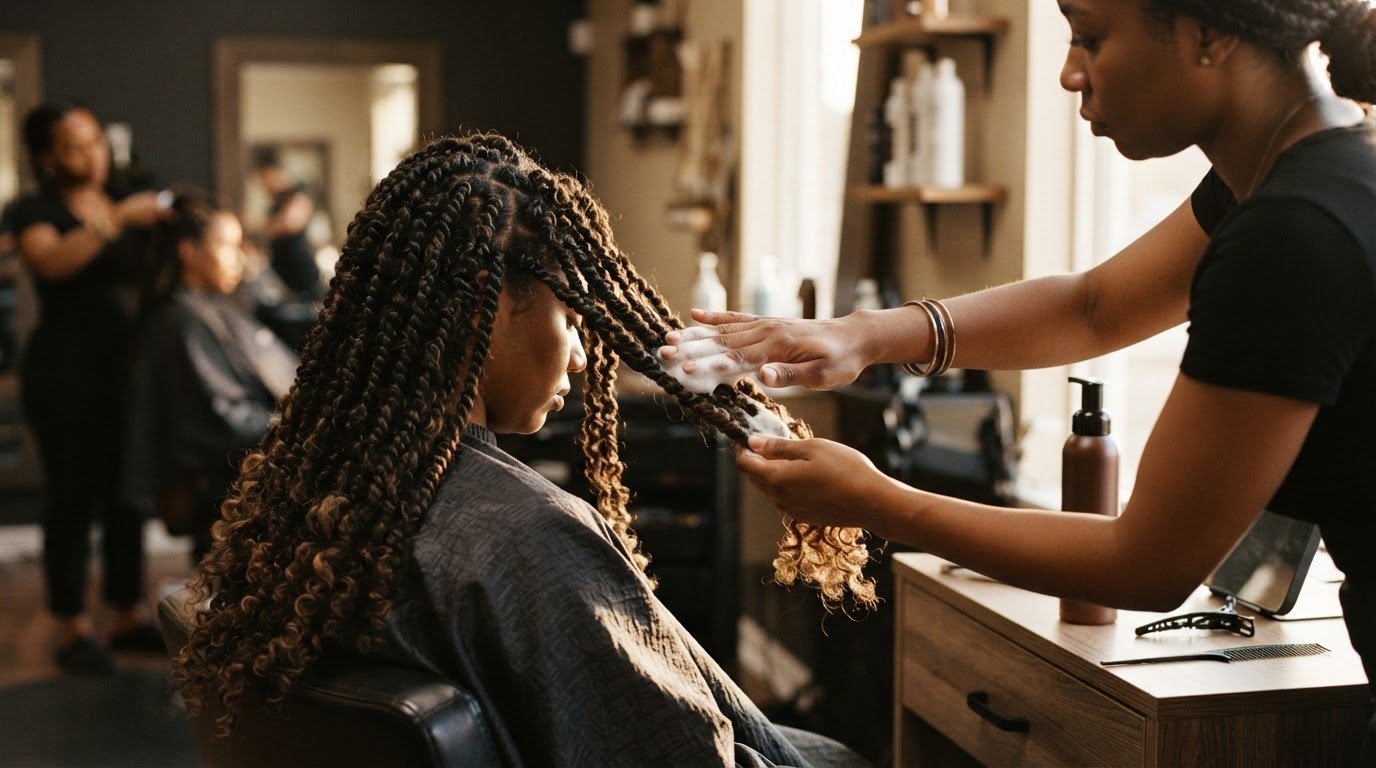
A stylist can also wash and moisturize hair while it’s in braids, twists, or locs. They can gently cleanse the scalp and accessible sections, then apply suitable moisture without disrupting the style. The method depends on the installation, so your stylist can guide you on care for your specific look.
Before you leave, ask for a simple care plan covering cleansing, moisture, and drying. For instance, your stylist can explain how to reach your scalp between sections and avoid leaving damp areas after washing. A clear routine helps you care for the style without adding unnecessary steps.
5. Crochet styles and faux locs
Crochet styles and faux locs can both use a cornrow foundation, but they create different finishes. With crochet braids, a stylist attaches extensions to the foundation using a crochet method. Faux locs can also be crocheted onto cornrows or created by wrapping extensions around braided natural hair. Your preferred look helps determine which approach makes sense.
Crochet braids suit a range of textures and shapes, from loose curls to loc-like extensions. The finished look depends on the extension style and how the stylist places it. For example, a curly crochet look creates a different silhouette from a neat, loc-inspired finish. Bring reference images showing the texture and overall shape you like, rather than choosing by length alone.
Faux locs focus on the appearance of locs, while crochet describes an installation method that can create several looks. This distinction matters when you describe your goal. If you want loc-like strands, explain that preference and discuss faux locs. If you want a different extension texture, describe the curl or shape you prefer and ask about crochet braids.
The cornrow base is important in either crochet installation. A stylist sections your natural hair and forms the base before attaching extensions. The size and direction of the cornrows help shape the parting and finished style. Discuss your preferred part and how you usually wear your hair, such as swept to one side or kept away from your face.
Faux locs installed by wrapping begin with braided natural hair, while crocheted locs attach to cornrows. These methods differ in their foundations and how extensions are secured. Your stylist can assess your hair’s length and density, then explain how each method may work with your preferred loc size and placement. This helps you choose an installation based on the finish you want, not just a style name.
Plan upkeep around the exact texture you choose. A curly crochet finish, for example, may need gentle separation to keep strands from tangling. Loc-like extensions have a different surface and appearance, so ask for care guidance that matches the installation. Your stylist can also explain how to cleanse the scalp and dry the base without disturbing the attached hair.
Before installation, agree on the foundation, extension texture, parting, and finished shape. Ask how the style will be cared for and removed, especially if this is your first crochet installation. A professional crochet braid appointment can help you explore the technique and settle on a look suited to your routine.
Phemmie's Place
At Phemmie's Place in Glen Burnie, you can discuss your routine, preferred look, and hair needs to choose a considered protective style. If you’re weighing everyday upkeep against your desired finish, a stylist can discuss options such as knotless braids, box braids, or Boho Braids. For longer-term loc care, Sisterlocs & Micro-loc Services may suit a different styling goal.
Bring your preferences to your appointment: how you like to wear your hair, what feels comfortable, and how much care fits your schedule. That conversation helps shape a style and installation plan around your needs, not appearance alone.
For a thoughtful conversation about protective styling, contact Phemmie's Place.
Choose a style that fits your next season
The best choice is one that fits your routine, not simply the one that looks easiest to maintain. Before your next appointment, consider how you want to wear your hair, what care feels realistic, and which finish makes you feel like yourself. These priorities can guide a thoughtful conversation with your stylist.
For low maintenance protective styles for moms, a professional can connect your everyday needs with a style you’ll enjoy wearing. At Phemmie's Place in Glen Burnie, options include Knotless Braids, Boho Braids, and Box Braids. Share the look you’re drawn to and the time you can give its upkeep, then choose a style that feels right for you.
A moment set aside for your hair can be a small, restorative part of a busy week. Contact Phemmie’s Place to discuss styles, and take the next step toward a look that suits you.
Frequently Asked Questions
What is the difference between a low manipulation and protective style?
A low-manipulation style reduces how often you handle or restyle your hair; a protective style also helps shield the strands, especially the ends. For example, wearing loose hair in a simple shape may reduce daily combing without covering the ends. Braids can do both, depending on how they’re installed and maintained. Choose based on whether your priority is fewer styling steps, added coverage, or a balance of both.
How long do box braids, twists, and cornrows typically last?
Box braids can last up to 8 weeks with proper care. How long a style can be worn depends on its installation and care, so pay attention to how your hair and scalp feel.
Which protective styles are quickest to install and easiest to maintain at home?
Cornrows or crochet braids are practical options to discuss when a streamlined installation is your priority. The easiest style to maintain at home depends on your routine and the care it requires.


Comments