


Tension Free Braids Glen Burnie: Gentle Styles and Tips

Persistent soreness, redness, bumps, headaches, or shiny, pulled skin can signal that a style is too tight. Loosen or remove it if these signs develop. For tension-free braids in Glen Burnie, comfort should guide the style and installation, not just the finished look.
Braids and twists can be neat and easy to manage, but they shouldn’t leave your scalp feeling strained. This guide covers gentle natural hairstyles, ways to reduce tension, and warning signs that mean it’s time to change your style. You’ll also find simple care tips to help your scalp feel more comfortable while your hair is styled.
1. Low-tension hairstyles for natural hair
Natural hair can be worn in styles that keep the roots comfortable and avoid unnecessary pulling. Two-strand twists made with your own hair are a simple example. Without added hair, they have no anchor knots at the roots and spread their weight along each strand. This construction avoids added anchor knots at the roots and distributes weight along each strand, making these twists a gentler option for the scalp and edges.
To create two-strand twists, detangle the hair, divide it into sections, then wrap the two strands around each other. Keep your fingers gentle at the roots instead of pulling the hair taut. Smaller twists create a more defined look, while larger twists require fewer sections and give a softer, fuller shape. If a root feels tight as you work, loosen that section before continuing.
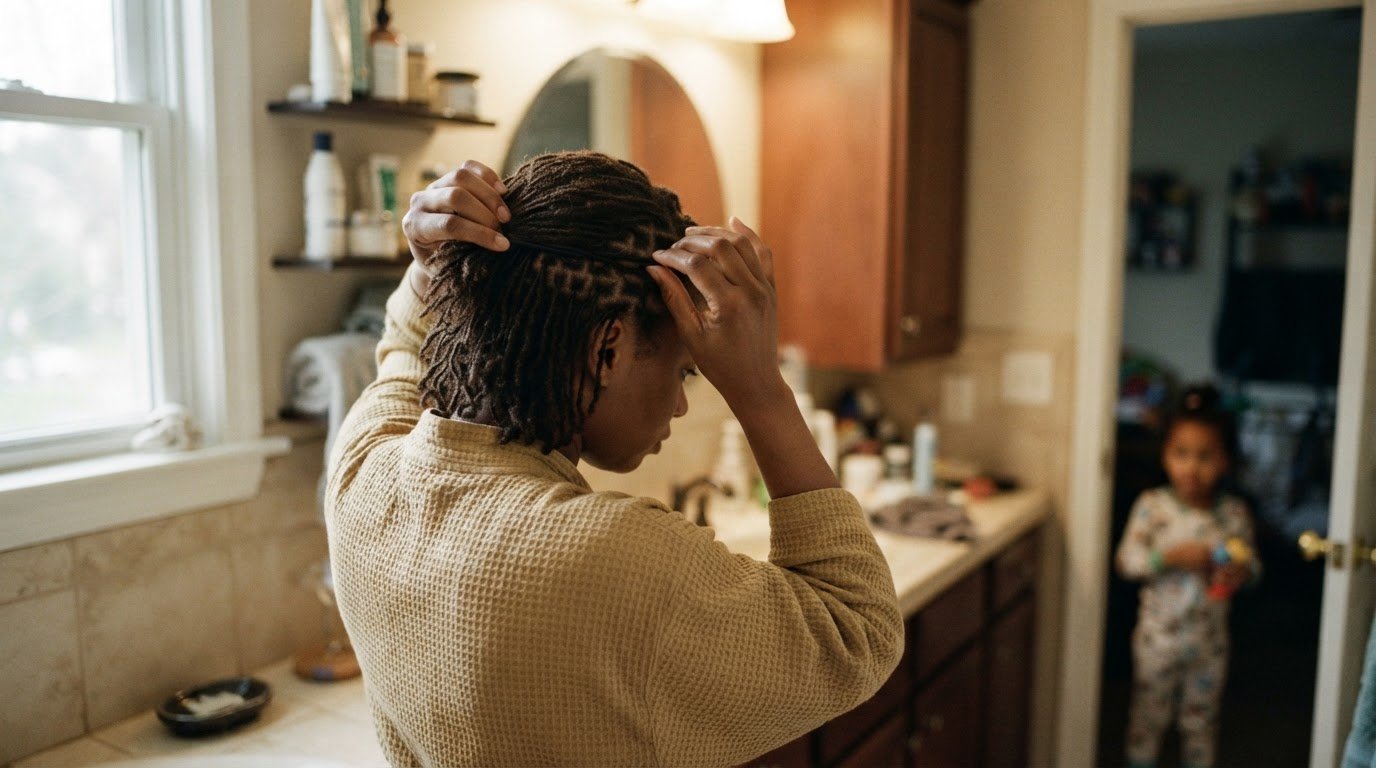
Moisture care can fit naturally into a low-tension routine. Cleanse your scalp weekly or as needed, parting between twists so water and cleanser reach the skin. Follow with a light leave-in or moisturizer along the lengths, then smooth a small amount over the ends. Avoid layering heavy products at the roots, where buildup can make cleansing more difficult.
At night, protect twists from friction with a satin bonnet or scarf. For jumbo box braids or Senegalese twists, a large satin bonnet can cover the style and help keep the ends smooth. Gather longer hair loosely before covering it instead of pulling it into a tight ponytail. In the morning, release the hair gently and check that the hairline feels comfortable.
A hair steamer can help ease tension from tight braids. If your scalp feels uncomfortable, pause and reassess before continuing. Steam is a comfort step, not a reason to keep a style that causes persistent soreness, redness, bumps, headaches, or shiny, pulled skin. If these signs appear, loosen or remove the style instead of relying on steam alone.
For a low-tension style that fits your routine, consider your hair’s length, density, and comfort. Loose two-strand twists work without added weight, and a large satin bonnet can protect them overnight. Cleanse gently and regularly, and let comfort guide how closely you twist near the hairline. These small choices can make natural styling easier to manage.
2. Ways to reduce braid and twist tension
Braiding salons in Glen Burnie set their own booking rules. Deposit or consultation requirements vary: one salon may request a deposit or consultation, while another may use a different booking process.
Reduce tension before the first braid or twist is installed. Choose a size and length that feel manageable for your hair, since added length and hair can increase the pull on individual sections. Tell your braider if your hairline is sensitive or you prefer a relaxed finish. Sharing that preference helps guide the size, root technique, and overall weight.
Section size matters. Unruly recommends avoiding micro sections and using bigger sections for braids because bigger sections mean less weight per braid. Avoid micro sections if you want a lighter feel. Ask for loose first knots and relaxed roots, especially around the temples and nape. The first knot anchors the style, so pulling tightly there can strain the surrounding scalp. A braid should not need a painfully tight base to stay secure.
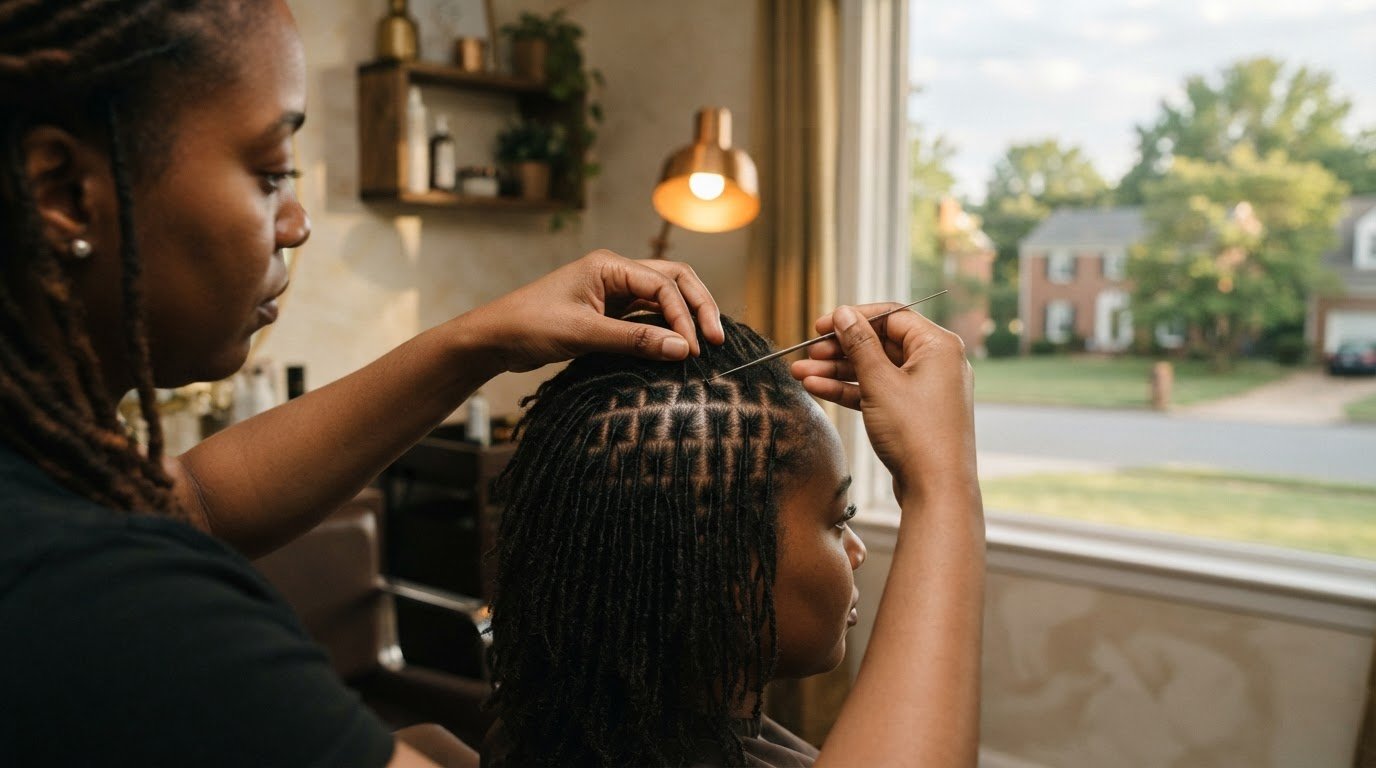
During installation, speak up as soon as a section feels uncomfortable. Describe the exact spot, for example, “the left temple feels tight,” rather than waiting until the style is complete. Your braider can ease that section before continuing. Check the front hairline, behind the ears, and the nape as the style progresses, since these areas can feel different from the crown.
If your braids already feel tight, a warm shower for a few minutes may help. You can pair it with a gentle scalp massage at the braid roots. Use your fingertips, not your nails, and avoid tugging at the extensions. Move slowly across the scalp, then pause to see whether the pressure has eased. Stop if massage increases discomfort.
For twists, request larger sections and loose roots rather than tiny, tightly anchored parts. For braids, consider a size and length that keep the total weight comfortable. These choices support a gentler result without sacrificing a neat finish. Agree on section size, ask for relaxed roots, and share discomfort promptly. Practical choices like these can help make tension-free braids in Glen Burnie more achievable.
If you’d like a considered approach to a comfortable style, explore braid and twist styling as a next step.
For a less tight style, request larger parts and looser first knots when discussing braids or twists. Make both preferences clear: ask for larger parts, then ask for looser first knots. Focusing on part size and first-knot tension gives you two specific details to communicate.
Unruly recommends avoiding micro sections and using bigger sections for braids because bigger sections mean less weight per braid. For braids, favor bigger sections over micro sections, with less weight per braid as the stated reason. For twists, the paired recommendation is larger parts and looser first knots. Together, these are specific choices to request when a less tight result is the aim; keep the ask focused on section size and first-knot tension.
3. What types of tension-free braids are available in Glen Burnie?
No braid style is automatically tension-free. In Glen Burnie, the comfort of knotless braids, box braids, Fulani braids, cornrows, or crochet braids depends on the installation, section size, added hair, and how your scalp responds. Treat “low tension” as a styling goal, not a guarantee attached to a style name. Discuss your preferred look and comfort needs before choosing.
Knotless braids begin with your natural hair, with added hair gradually incorporated along the braid. This avoids a bulky starting knot, but careful technique still matters. Ask for relaxed roots and a comfortable size. If you prefer a fuller look, larger parts can help keep the number of braids and their combined weight manageable.
Box braids have a clear, square-parted pattern and can be tailored in size and length. Smaller sections create more individual braids, while longer or heavier extensions can increase the load on your hair. Consider medium or larger sections and a length that doesn’t pull when you move. Comfortable box braids should not depend on tight roots to stay neat.
Fulani braids combine cornrowed sections with freely hanging braids. Because the patterned rows sit close to the scalp, relaxed cornrows and gentle edges matter. Boho braids add loose, textured strands. Discuss where those strands will fall and how much added hair the style needs, since overall weight and placement can affect comfort.
Crochet braids use a cornrow base, with hair added through the rows. Both the finished style’s weight and how firmly the base is braided affect scalp comfort. Men’s cornrows and braids can also be installed with a low-tension approach. For any style, speak up early if a row, part, or hairline feels strained.
Compare styles by asking what the installation involves, how much added hair it uses, and how the roots will be handled. A lighter style with larger sections may suit someone who wants less pull than many small, tightly secured braids. Bring a reference image and discuss how to adapt its length, parting, and braid density for comfort. These details help turn inspiration into a thoughtful style choice in Glen Burnie.
5. Which Glen Burnie braiders have the best reviews for gentle, low-tension braiding?
A high star rating alone doesn’t show whether a braider works gently. Reviews are more useful when they describe the installation, such as relaxed roots, comfortable parts, or a stylist adjusting a section after feedback. Those details say more about low-tension care than a brief comment that says only “great braids.”
Look for specific descriptions of how the appointment felt. A review saying the client could speak up when a braid felt tight gives more context than one that praises only the finished photos. Comments about a stylist checking the hairline or loosening a section during installation can also help you understand the experience.
Notice whether reviews mention similar comfort details across appointments. One comment may describe gentle handling for knotless braids; another may mention careful cornrows. Repeated descriptions can offer a clearer picture of the braiding experience than a single enthusiastic review. Still, reviews reflect individual experiences, and no star score can promise the same result for everyone.
Separate satisfaction with the style from feedback about comfort. A review might praise the neatness of Fulani braids or box braids without saying anything about scalp tension. That helps you judge the look, but not how the roots felt. For a fuller picture, read the whole review and note whether it discusses both the finished style and the installation.
Recent, detailed comments are easier to interpret than brief ratings without explanation. For example, “the stylist adjusted the front row when I felt pulling” gives a concrete account of communication. A vague “five stars” does not tell you whether the client discussed tension, how the braider responded, or whether the hairline felt comfortable afterward.
Use a simple approach to reading reviews: identify comments about comfort, note examples of communication, and compare those details with your priorities. If reviews describe a gentle pace and adjustments, those details may matter more to you than comments about braid size or photo-ready styling. For tension-conscious braids in Glen Burnie, look for detailed accounts of both technique and comfort, rather than relying on ranking language alone.
5. What are the risks of braids that are too tight, and how can I avoid them?
Braids that pull can cause persistent soreness, redness, bumps, headaches, or shiny, stretched-looking skin around the hairline. These signs mean the style is putting too much tension on your scalp. Pain is not proof that braids are secure. Pay attention to how your scalp feels during installation and afterward.
Act promptly if discomfort starts. Ask to have tight sections loosened, or remove the style if symptoms persist. A warm shower for a few minutes and a gentle massage at the braid roots may ease tightness. Use your fingertips and avoid pulling at the braids. Stop if massage worsens the discomfort.
You can also wrap a warm, damp towel around your head for at least an hour. Keep it comfortably warm, not hot, and let it rest without pressing or tugging on the braids. Reassess the roots and hairline afterward. If soreness, bumps, or headaches remain, don’t rely on warmth alone to solve the problem.
Severe braid-related pain shouldn’t require daily painkillers. If you take them every day to tolerate a style, treat that as a reason to loosen or remove the braids, not push through. Tight styles that have not eased after a few days should come down as soon as possible to help prevent further damage. Waiting longer can prolong the strain.
For your next style, agree on comfort details before braiding begins. Request larger sections, loose roots, and a lighter length if added hair is involved. During installation, speak up if an area, such as a temple or the nape, feels tight. Your braider can adjust that section before repeating the same tension elsewhere. Your feedback helps create a comfortable result.
After removing tight braids, handle your hair gently. Avoid immediately reinstalling a style that pulls on the same areas. Cleanse your scalp as needed, then choose a relaxed style that doesn’t press on sore spots. If symptoms continue after removing the braids, seek advice from a qualified health professional.
For a style that feels more comfortable from the start, plan a gentler braid appointment with your comfort needs in mind.
Let comfort guide each decision rather than judging the result only by how neat or secure the braids look. If you use a warm, damp towel, keep it around your head for at least an hour; it should feel comfortably warm and rest gently without adding pressure. Notice whether the roots and hairline feel better afterward. If they do not, or discomfort increases, don’t repeat a measure that isn’t helping. Loosen or remove the style, and seek professional advice if symptoms persist afterward. For future appointments, explain which areas felt uncomfortable and ask your braider to check them as work progresses. A style should feel manageable during installation and afterward. Speaking up early can help prevent the same tension from being built into the rest of the style.
Phemmie's Place: Knotless Braids
Phemmie's Place offers Knotless Braids in Glen Burnie for clients seeking a considered, comfortable installation. Knotless braids aren’t automatically tension-free, so discuss your preferred size, length, and comfort needs before styling begins. Sharing sensitive areas helps guide choices around your hairline and scalp.
Bring a reference image if you have a particular finish in mind. Discuss how its braid size and length can suit your hair while keeping comfort in focus. If you’re considering a different look, Boho Braids and Box Braids are also available at Phemmie's Place.
Contact Phemmie's Place to discuss Knotless Braids and the style you have in mind.
Make your next style feel like your own
Your next appointment can begin with a simple conversation about how you want your hair to look and feel. Bring a photo, share what comfort means to you, and describe any areas you want handled gently. This gives your braider a clear starting point for shaping a style around your preferences.
For tension-free braids in Glen Burnie, consider the look you’ll enjoy wearing, then discuss a comfortable approach. At Phemmie's Place, you can talk through Knotless Braids, Boho Braids, or Box Braids and the details that matter to you. A thoughtful plan helps you move toward a personal, polished style that feels easier to wear.
Contact Phemmie's Place to discuss gentle styles, and take the next step toward a look that feels like you.
Frequently Asked Questions
What are signs that my hairstyle is too tight?
A style may be too tight if your scalp stays sore, your hairline becomes red or bumpy, you develop headaches, or the skin looks shiny and pulled. Notice whether pain worsens when you move or touch the roots. Don’t wait for discomfort to become severe. Loosen or remove the style if these signs persist, and seek medical advice if symptoms continue afterward.
Which salons in Glen Burnie offer tension-free braids?
Phemmie's Place in Glen Burnie offers Knotless Braids, Boho Braids, and Box Braids. The salon describes its installations as scalp-friendly and customized to your hair texture and preferred length. No braid style can promise zero tension for everyone, so discuss your comfort needs and desired length before your appointment. Share sensitive areas so the installation can take your preferences into account.
What hair length and condition are needed for tension-free braids?
Choose a style and length that feel manageable for your hair, considering its length, density, and comfort. For two-strand twists, begin with detangled hair.
How long do tension-free braids last, and how should I care for them?
Cleanse your scalp weekly or as needed, apply a light moisturizer to the lengths and ends, and cover your braids with a satin bonnet at night. Loosen or remove the style if persistent soreness, redness, bumps, headaches, or shiny, pulled skin develops.

Comments