


Professional Natural Hairstyles for Work for Every Texture

A polished work hairstyle doesn’t have to hide your natural texture. Professional natural hairstyles for work include curls, puffs, twists, braids, and cornrows. Choose a look that suits your texture, routine, and preferred level of upkeep.
It’s understandable to want a style that feels like you and looks neat throughout the workday. Professional doesn’t mean one look or one texture: simple, intentional styling works across curls, coils, and locs.
Explore ways to wear natural curls and afros, create easy updos, and choose braids or cornrows for a polished finish. You’ll also find practical tips for keeping a style comfortable and presentable at work, so you can choose an option that suits your hair and your day.
1. Flat twists, puffs, and twisted updos
Flat twists, puffs, and updos offer three ways to shape natural texture for the workday. Choose a flat twist when you want hair close to the scalp, a puff when you want volume gathered in one place, or an updo when you prefer to secure your length. A simple bun can be styled in minutes and is described as a protective hairstyle. These options also work without heat, keeping the finish focused on your natural texture.
To create flat twists, part your hair where you want the design to begin. Take two strands near the part and twist them together, adding a little hair as you move along the scalp. Unlike a braid, which uses three strands, a flat twist creates a different pattern. Follow your head’s curve or make straight rows toward the back. Gather the ends into a bun for a neat, contained finish.
For a flat-twist bun, divide your hair into sections before styling. Twist each section close to the scalp, guide the ends toward the nape, then gather them into one bun. You can also create twists from the front hairline toward the crown and secure the remaining length in a puff. This approach pairs a defined hairline with visible volume. Keep the parts simple for a clean look that feels intentional without extra ornament.
A puff is easy to adapt to your preferred shape. Gather your curls at the crown for a high silhouette or lower down for a softer outline. Guide your hair together with your hands, then secure it gently with a hair tie or suitable holder. Leave the puff full and rounded, or divide it into two smaller puffs for a playful variation. A smooth side part adds structure without changing your texture.
For a twisted updo, work in sections and coil each twist around the base or across the back of your head. Tuck the ends into the shape, then secure them with a claw clip. To create spiral curls without heat later, release the twists. Position the clip so it holds comfortably instead of forcing your hair into a tight shape.
A claw clip can hold gathered hair without the repeated pulling of a hair tie. Choose one large enough for your sections, then position it over the twist or bun. For a quick workday style, gather your hair at the nape, twist it upward, fold the ends down, and secure the fold with the clip. Check the outline from the front and sides before heading out.
For a refined finish, pair one clear detail with one simple shape: a side part with a puff, or flat twists with a low bun. Tuck away pins and arrange loose ends deliberately. This final check helps your style look considered from every angle.
2. Afros and natural curls at work
Afros and defined curls can look polished at work without changing their natural shape. In the United States, workplace protections depend on applicable federal, state, and local anti-discrimination rules. Some state and local laws specifically address hair texture and styles associated with race, and their scope varies by location.
Start with the finish you want for the day: a rounded afro, defined curls, or a gathered shape. For a rounded silhouette, gently lift the roots and arrange the outline with your fingers or a pick. For defined curls, carefully separate visible clumps, then let them settle naturally. A clean part or shaped outline adds structure without flattening your texture.
A wash-and-go can work for the day when your curls are moisturized and the shape feels comfortable. Kinkier hair textures may be more prone to breakage if a wash-and-go stays in too long without enough moisture. Refresh the style as needed, and avoid keeping curls compressed under a tight hat or scarf for extended periods. Care between wash days helps preserve definition.
For a more controlled outline, gather only the front or sides of your hair. Smooth those sections back with your hands and secure them, leaving the rest of your afro or curls free. This creates a half-gathered look without hiding your texture. You can also define a side part and tuck one side behind your ear for a subtle change.
Choose a workday shape that fits the way you move. If you spend the day at a desk, a loose afro can stay open and expressive. If you move between meetings or tasks, a low gathered style keeps curls away from your face. Avoid pulling the hairline too tightly. Comfort matters when a style needs to stay in place for hours.
If your curls lose their shape overnight, prepare them before bed instead of restyling from scratch each morning. Divide your hair into a few loose sections and protect the shape with a gentle wrap or covering. In the morning, release each section and use your fingers to restore volume. A light touch helps preserve the curl pattern.
Keep finishing details simple. Check the front, sides, and back in a mirror, then smooth stray hairs only where you want extra definition. A shaped afro, side-parted curls, or softly gathered crown can each look intentional. Let your texture guide the final form, and choose a style that stays comfortable throughout your workday.
Workplace protections may come from applicable federal, state, and local anti-discrimination rules. Some state and local laws specifically cover hair texture and styles associated with race, with protections varying by location.
3. Half-up, half-down styles
A half-up, half-down style combines two shapes: gathered sections at the crown and loose length below. It suits curls, coils, and textured hair at different lengths. For a simple workday version, part your hair from temple to temple, gather the upper portion, then secure it while leaving the lower section free. Adjust how much hair you gather to balance definition and volume.
Start with hair detangled enough to part comfortably. Use your fingers or a wide-tooth comb to make a clean part across the crown. Gather the top section without pulling tightly, then secure it with a covered elastic, clip, or other gentle holder. Let the lower curls fall naturally or arrange them over your shoulders. A smooth part adds structure, while a softer part keeps the finish relaxed.
For a curly half-up look, define the loose section before gathering the crown. Work through small sections with your preferred styling product, then let the curls settle into their natural pattern. Shape the loose length before gathering the top, so the bottom stays full and defined. For example, leave curls around your face while securing the center crown. This frames your features without pulling every section away from the hairline.
Coils lend themselves to a sculpted variation. Divide the upper section into two sides, twist each side toward the back, and secure the twists together at the crown. Leave the remaining coils loose or arrange them into a rounded shape at the back. This adds detail without a complex pattern. Keep the twists comfortable, especially near the temples, where tension can feel distracting during a full workday.
For added polish, wrap a small section of hair around the holder and tuck its end underneath. A side part can change the look without changing its basic shape. Try a center part with a smooth crown for balanced lines, or sweep the gathered section slightly to one side for a softer silhouette. Keep accessories simple, such as a neutral clip, so the gathered shape stays in focus.
Length and density affect how much hair the upper section can hold. If it feels heavy, gather a smaller section or use a secure clip instead of tightening an elastic. Shorter curls can create the same effect: gather the front and crown, then pin them back while leaving the sides and nape loose. Check that the pins feel secure and don’t press against your scalp.
Before leaving home, view the style from the front and sides. Smooth only the areas you want to refine, then separate loose curls with your fingers if they look compressed. A half-up look should feel balanced: the crown is gathered, the lower section remains visible, and the hairline feels comfortable. Adjusting the part, gathered section, or accessory can make the style suit a meeting or a regular office day.
4. Professional braids and cornrows
Yes, locs, braids, and twists can all be professional work hairstyles. Clean parting, a comfortable fit, and a neat finish help the style look intentional. You don’t need to hide your texture for a polished workplace look.
Braids offer a practical way to tuck natural hair away while keeping your style visible. Choose a pattern and length that suit your routine, then arrange the braids neatly around your face and shoulders. For a more contained shape, gather longer braids into a low bun or ponytail. This simple change gives the same braided style a different feel for a meeting or a regular office day.
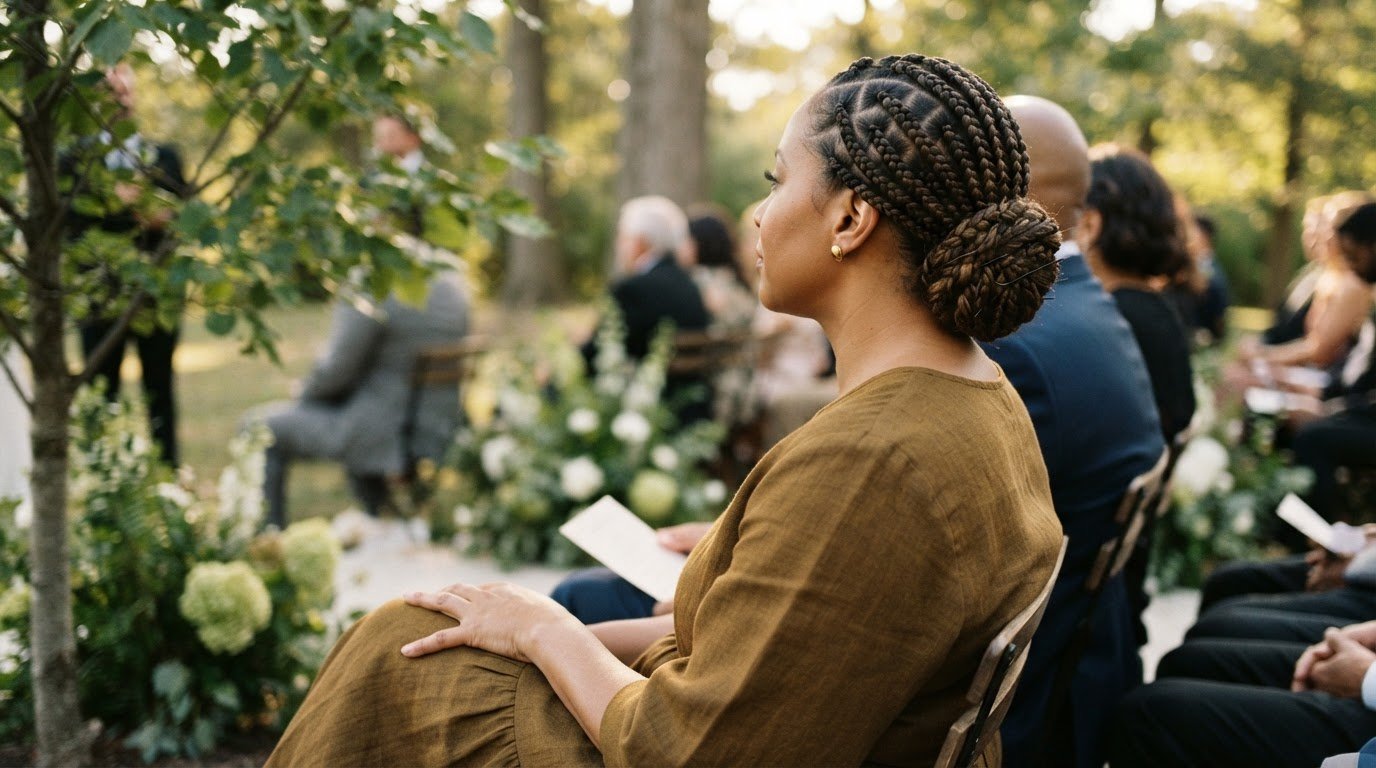
Cornrows can also create a refined workday style. Straight-back rows give a streamlined outline, while curved parts add detail without leaving hair loose. Gather the ends into a high bun when you want your hair fully secured. The bun keeps the overall shape compact, making it a polished option for a busy schedule.
Locs bring texture and structure to a professional look. Wear them loose and arranged away from your face, or gather them into a bun for a more contained silhouette. Style twists similarly: wear them down, sweep them to one side, or secure them at the nape. A deliberate part or smooth gathering helps each style feel finished.
Comfort matters throughout the workday. A style that pulls at the hairline or feels too tight can become distracting, so choose a fit that lets you move comfortably. Secure loose ends and arrange braids, twists, or locs before leaving home. If you wear a bun, position it where it won’t interfere with your usual tasks or clothing.
Protective styles also need consistent care. Keep your scalp clean and follow a routine suited to your hair and style. Don’t let a style become uncomfortable or neglected just because it stays in place. Braids and cornrows can keep natural hair tucked away, while proper care supports your hair as you wear them.
For a versatile office look, start with a style you already enjoy, then change how you wear it. Leave box braids loose for length, gather them into a bun for a compact finish, or choose cornrows you can tie up. Locs can go from a loose arrangement to a secured updo with a simple change. Each option lets you keep your natural style while choosing a shape that suits the workday.
Braids can tuck natural hair away for work, but proper care is essential to keep them protective.
5. How do I make a natural hairstyle last through a workday?
Start with a style that suits your hair and schedule. Many curly styles last a day or two, while perm and flexi rod sets can last for days with proper care. Results depend on the technique, how you prepare your hair, and how you protect the finished shape. A simple evening routine can reduce morning restyling.
Let curls settle fully after styling before bed. Avoid crushing their shape against a pillow or tucking damp curls into a tight wrap. For a twist-out, keep the twists in place overnight, then release them gently in the morning. Separate curls with your fingers instead of repeatedly brushing to help preserve their definition.
Protect gathered styles with a silky piece of material. Wrap it around a bun or plait to help prevent the material from absorbing moisture from your hair. Tie the wrap securely enough to stay in place, but don’t pull tightly at your hairline. In the morning, remove it gently and arrange the bun or plait with your hands.
Choose a nighttime approach that matches your style. For a bun, gather the hair loosely and cover it with the silky material. For a plait, wrap the length without flattening the roots. If you wear a twist-out or rod set, protect the curls as they are instead of combing them out before bed. These steps help preserve the style’s shape.
In the morning, refresh only the areas that need attention. Smooth a puff’s crown, reposition a loose pin, or gently separate curls that have clumped together. Avoid reworking the entire style if only one section has shifted. Check the front, sides, and back for flyaways or flattened areas before you leave.
During the workday, avoid handling your hair repeatedly. Touching curls can disturb their shape, while repeatedly tightening a ponytail can strain the same area. If your style needs a small adjustment, arrange it with your fingers instead of pulling firmly. Keep suitable pins or a gentle holder nearby for a loose twist or bun.
Humidity, movement, and the style itself can affect how well your hair holds its shape. A loose curl set may need a light refresh, while a secured updo may need only a quick pin adjustment. Plan your routine around the style’s structure: preserve loose curls, protect plaits, and secure gathered sections comfortably. For a longer-lasting look, explore styling options that suit your routine.
If a bun or plait is part of your look, a silky piece of material can help protect it. Use it as a layer to help avoid absorbing moisture from your hair, rather than changing the style. This keeps your evening routine focused on preserving the gathered shape you chose, without adding another styling step.
Phemmie's Place
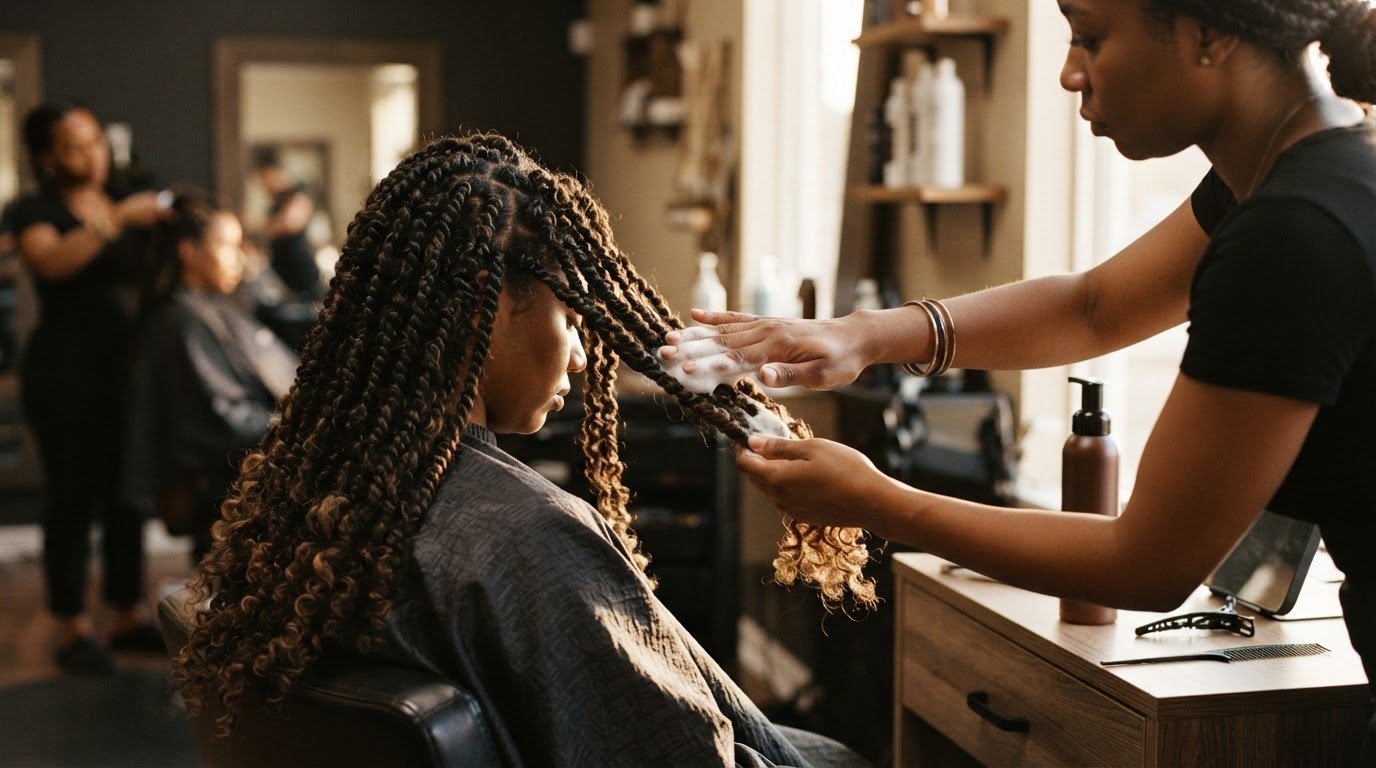
Phemmie's Place in Glen Burnie offers natural styles that look polished and are manageable for work. For a protective style with a finished shape, choose Knotless Braids, Boho Braids, or Box Braids. Sisterlocs & Microloc Services offer another way to wear a style that reflects your texture and routine.
Think about how you want to wear your hair, how much daily styling you prefer, and what feels comfortable at work. These details can guide you toward a style that suits both your look and routine. To discuss a workday style with Phemmie, book an appointment at Phemmie's Place.
Choose a style that feels like yours
Your next workday look can begin with a simple question: how do you want to feel wearing it? Professional natural hairstyles for work should suit your personal style and routine. Consider whether you prefer a soft, expressive shape or a more contained silhouette, and how much time you want to spend styling before the day begins. These preferences can guide you toward a look that feels natural, polished, and genuinely yours.
You don’t need to settle on one signature style forever. Let your schedule, mood, and the way you want to wear your texture guide each choice. If you’d like thoughtful help finding a style that fits your workday, contact Phemmie's Place today. Take your time, honor your texture, and choose a look that lets you step into work feeling like yourself.
Frequently Asked Questions
What natural hairstyles are considered professional for work?
Professional natural hairstyles for work include shaped afros, braids, twists, and locs. Choose a style that feels intentional and suits your workplace. For example, define a part or arrange locs neatly away from your face. A comfortable hold and clear view around your eyes help create a polished look without changing your natural texture.
What low-maintenance natural hairstyles are suitable for the office?
A short natural crop can simplify your office routine because it takes less daily styling than a longer shape. Keep the outline comfortable and follow a care routine suited to your curls or coils. If you prefer more length, choose a style that stays arranged without frequent adjustments. A cropped shape or neatly gathered locs can make morning preparation easier.
How can I choose a professional natural hairstyle for a job interview?
Choose professional natural hairstyles for work that you already know how to maintain, rather than trying an unfamiliar look on interview day. Consider the setting and whether you’ll travel, sit through a long conversation, or move between rooms. Wear a style that keeps your face visible and feels comfortable. A brief practice run can help you settle the shape before the interview.

Comments